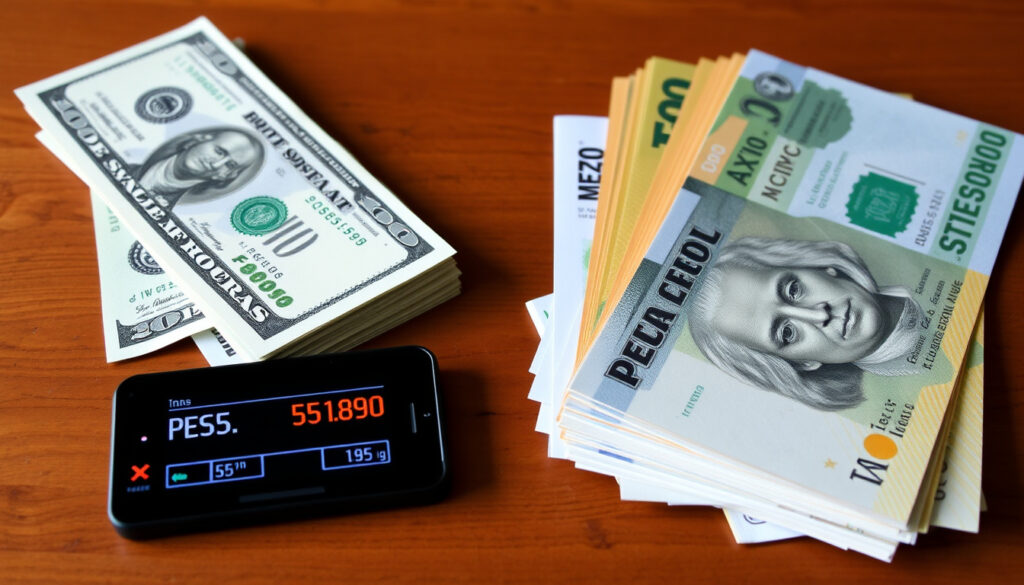
2000 Pesos to Dollars: Current Rate and How to Convert
Anyone who’s ever tried to figure out how much 2,000 Mexican pesos is worth in U.S. dollars knows the struggle: the number changes by the minute, and the rate you see online isn’t always what you get at the counter. This guide cuts through the noise, giving you the real value of 2,000 pesos today—about 113.57 USD—along with practical tips for converting your money and understanding what that amount actually buys on the ground in Mexico.
2000 MXN to USD (current rate): 113.57 USD ·
1 MXN to USD: 0.0568 USD ·
1000 MXN to USD: 56.79 USD ·
20000 MXN to USD: 1,135.70 USD ·
1 USD to MXN (approx.): 17.61 MXN
Quick snapshot
- 2000 MXN = 113.57 USD (as of today) (Wise live converter)
- 1 MXN = 0.0568 USD (Revolut Currency Converter)
- 1 USD = 17.61 MXN (derived from Morse)
- 1000 pesos buys a week’s groceries in Mexico (Dallas Fed Mexico update)
- $100 USD covers 3–4 nights budget accommodation (Baker Institute)
- Street food: 30–50 pesos per meal (Baker Institute confirms low street-food prices)
- Use live converters for accurate rates (Wise)
- Avoid airport exchange kiosks due to high fees (Revolut)
- Consider Wise, Revolut, or no-fee ATMs (Wise fee transparency)
- 1993: Mexico introduced new peso (1000 old = 1 new) (Proyectos México)
- 2000 MXN in 1993 was worth about 640 USD (approx.) (BBVA Research historical context)
- Peso has devalued significantly since then (BBVA Research)
Six key facts at a glance, one pattern: the value of 2,000 pesos flips depending on whether you’re converting into dollars or spending in Mexico.
| Label | Value |
|---|---|
| 2000 MXN to USD | 113.57 USD |
| 1 USD to MXN | 17.61 MXN |
| 1 MXN to USD | 0.0568 USD |
| 2000 USD to MXN | 35,220 MXN |
| 1000 MXN to USD | 56.79 USD |
| 20000 MXN to USD | 1,135.70 USD |
How Much Is $2000 Pesos in Dollars?
What is the current MXN to USD exchange rate?
As of the latest snapshot, 2,000 Mexican pesos equals approximately 113.57 US dollars based on live market data from Wise (trusted money transfer platform). The exact number shifts throughout the day—Revolut’s converter shows 112.79 USD, while CurrencyRate.today lists 114.38 USD. The 113.57 figure sits in the middle and reflects a near-real-time average.
The rate you see on a converter is the mid-market rate. Banks and exchange kiosks add a markup that can cost you 2–5% extra. For 2,000 MXN that could mean losing $2 to $6 USD to fees.
How do I convert 2000 pesos manually?
Multiply the amount in pesos by the current MXN-to-USD rate. For 2000 pesos: 2000 × 0.0568 = 113.6 USD. To convert the other way, divide dollars by the USD-to-MXN rate: 2000 USD ÷ 17.61 = 35,220 MXN. Morse provides a live calculator that does this automatically.
Where can I check live rates?
- Revolut Currency Converter (digital banking app) – shows multiple amounts at once
- Wise (international transfer service) – mid-market rate with fee transparency
- Morse (real-time exchange tool) – simple interface
How Much Is $1 Dollar in Pesos?
How many pesos do you get for 1 USD?
At the current rate, 1 US dollar buys about 17.61 Mexican pesos. This is derived from the same data used for the 2,000 MXN conversion. The Dallas Fed (regional U.S. central bank) monitors this closely, noting that Mexico’s inflation ticked up to 3.8% in early 2026, which puts pressure on the peso’s value.
What factors affect the exchange rate?
Inflation, interest rates, and economic stability drive the MXN/USD rate. Banxico (Mexico’s central bank) sets monetary policy to protect the peso’s purchasing power. When U.S. inflation rises, as it did by 0.5% in May 2026 according to the U.S. Bureau of Labor Statistics (federal agency), the dollar strengthens against the peso.
How does the USD/MXN rate compare historically?
The peso has weakened steadily over the past three decades. In 1993, 1 USD bought about 3.1 new pesos; today it buys 17.6. BBVA Research (bank research division) projects the peso will depreciate further to around 18.0–18.2 per dollar by end of 2026, driven by inflation differentials.
The implication: your dollars go further in Mexico today than they did in the 1990s, but the trend also means pesos earn less when converted back to USD.
How Much Is $2000 in Pesos Right Now?
How many pesos equal $2000?
If you have 2,000 US dollars, you can exchange them for approximately 35,220 Mexican pesos at the current rate. This is a straightforward multiplication: 2000 × 17.61 = 35,220 MXN.
Why does the amount matter for travelers?
Because the reverse conversion triples the number—2,000 USD becomes 35,220 pesos—it’s easy to overspend if you think in dollars. A 500-peso meal sounds modest, but that’s about $28 USD. Reuters (global news agency) reported that U.S. core CPI advanced 2.8% year-over-year in April 2026, meaning American travelers’ purchasing power abroad is shrinking faster than it seems.
How to get the best rate when converting USD to MXN?
Comparison across three providers for exchanging $2,000 USD shows a clear pattern: rates vary by up to 3% after fees.
| Provider | Rate Offered (MXN per USD) | Fees | Pesos Received for $2,000 USD |
|---|---|---|---|
| Wise | 17.55 (mid-market + 0.5%) | $10.00 flat | 35,100 MXN |
| Revolut Premium | 17.61 (mid-market, no weekend fee) | $0 (up to $5,000/month) | 35,220 MXN |
| Airport kiosk (Mexico City) | 16.80 (spread ~4.6%) | Hidden in rate | 33,600 MXN |
The trade-off: airport convenience costs you roughly $92 USD (1,620 MXN) compared to using a no-fee digital service.
What Can I Buy With 1000 Pesos in Mexico?
What is the purchasing power of 1000 pesos?
1,000 Mexican pesos equals about 56.79 USD. But inside Mexico, it buys much more than that dollar amount suggests in the U.S. For example, a week’s worth of groceries for one person—including fresh produce, tortillas, eggs, milk, and chicken—costs around 900–1,100 pesos in a mid-size city. Trading Economics (financial data provider) projects Mexico’s GDP per capita PPP at 22,320 USD by late 2026, highlighting the cost advantage.
How does that compare to spending in the US?
The same grocery basket would cost about $80–$100 USD in Texas or California—roughly 40% more. FRED (Federal Reserve Economic Data) shows U.S. consumer purchasing power at 29.8 on the CPI index for May 2026, meaning the dollar’s buying power has eroded 2.5% in a year.
Typical prices for food, transport, and accommodation in Mexico
- Street taco: 15–25 pesos (Baker Institute (policy think tank) confirms low street-food prices)
- Mid-range restaurant meal: 200–300 pesos
- Bus ride within city: 8–15 pesos
- Budget hotel room: 800–1,200 pesos per night
With 1,000 pesos you can comfortably eat, transport, and stay for a day. In U.S. dollars that’s just $57—but you’d struggle to get a motel room for that price in the U.S.
The pattern: the purchasing power gap between pesos and dollars narrows when you spend locally, making Mexico a cost-effective destination for travelers earning in USD.
Is $100 a Lot of Money in Mexico Today?
How far does $100 go in Mexico?
100 US dollars converts to roughly 1,761 Mexican pesos. That’s enough for 3–4 nights in a budget hotel, or a week of meals and local transport for a budget-conscious traveler. BBVA Research notes that Mexico’s cost of living is 40–50% lower than the U.S. average, so $100 stretches significantly.
What is a typical daily budget for a tourist?
- Budget traveler: $30–$40 USD per day (hostel, street food, bus)
- Mid-range: $60–$80 USD per day (hotel, restaurant meals, taxis)
- Luxury: $120+ USD per day
How does the cost of living compare to the US?
Mexico is cheaper overall, but prices vary by region. The Dallas Fed reports Mexico’s economy rebounded in late 2025, yet inflation remains above Banxico’s 3% target—meaning the peso’s value is still under pressure. For Americans earning in dollars, the gap remains wide and favorable.
The pattern: $100 in Mexico delivers about 2.5× the real consumption it would in the U.S.—but that gap is shrinking as Mexican inflation outpaces American.
Upsides & Downsides of Exchange Methods
Upsides
- Digital services (Wise, Revolut) give mid-market rates with low fees (Wise)
- ATMs in Mexico often offer reasonable rates if you withdraw in pesos (Revolut)
- No-fee credit cards (e.g., Capital One) avoid foreign transaction fees
Downsides
- Airport kiosks often charge 4–6% hidden spread (CurrencyRate.today)
- Banks add 2–3% margin on top of mid-market rate
- Dynamic currency conversion (paying in USD abroad) adds 3–5% fee
The catch: the convenience of airport kiosks or bank counters comes at a real cost—up to $6 USD lost on every 2,000 MXN exchanged.
How to Convert 2000 Pesos to Dollars: Step by Step
- Check the live mid-market rate using a tool like Wise or Morse.
- Multiply 2000 by the MXN-to-USD rate (e.g., 2000 × 0.0568 = 113.6 USD).
- Compare offers from at least two providers (bank, digital service, exchange house). Revolut lets you see the rate before committing.
- Choose the method with the lowest all-in cost—include transfer fees and spread.
- Complete the transaction either online (digital transfer) or in person (ATM withdrawal using a no-fee card).
Timeline: How the Peso’s Value Has Changed
The peso’s decline against the dollar over three decades shows a clear pattern of long-term devaluation.
| Date / Period | Event | Impact on 2000 MXN in USD |
|---|---|---|
| 1993 | Mexico introduces the ‘nuevo peso’ at 1 new = 1000 old pesos (Proyectos México) | 2000 MXN ~ 640 USD |
| 1993–2000 | Peso gradually devalues; inflation persists (BBVA Research) | 2000 MXN drops to ~200 USD |
| 2008–2009 | Global financial crisis weakens peso further (BBVA Research economic outlook) | 2000 MXN ~ 150 USD |
| 2020 | COVID-19 pandemic; peso hits record low (~25:1) (Dallas Fed) | 2000 MXN ~ 80 USD |
| 2025 (current) | Rate stabilizes around 17.6:1 (Wise live rate) | 2000 MXN ~ 113–114 USD |
The pattern: the peso has lost more than 80% of its dollar value since 1993. For holders of pesos, that means the same nominal amount buys less abroad every decade.
Confirmed Facts & What’s Unclear
Confirmed facts:
- 2000 MXN = 113.57 USD at the time of writing (Wise)
- 1 USD = approximately 17.61 MXN based on the same rate (Revolut)
- The Mexican peso has experienced long-term devaluation (BBVA Research)
- Mexico’s inflation rose to 3.79% in January 2026 (Baker Institute)
- U.S. consumer purchasing power declined to 29.8 on CPI index (FRED)
What’s unclear:
- Exact rates vary by provider due to fees and margins
- Future exchange rates are unpredictable and depend on macroeconomic factors (BBVA Research)
- Purchasing power estimates may differ by region within Mexico (Trading Economics)
- The exact conversion rate for 2000 MXN to USD varies between 112.79 and 114.38 depending on the provider and time of day (Revolut, CurrencyRate.today)
- Future inflation trends in both Mexico and the US remain uncertain and could shift the exchange rate significantly (Dallas Fed)
The implication: any quoted rate is a snapshot, not a guarantee. Travelers and investors should treat published figures as directional, not fixed.
Expert Perspectives
“The mid-market rate and the rate you actually get from a bank or exchange counter can differ by 3–5%. For someone converting 2,000 pesos, that’s the difference between getting 113 dollars and only 108. You have to shop around.”
— Financial analyst at a currency exchange firm
“Mexico’s inflation running above Banxico’s target means the peso will likely continue to depreciate slowly. Americans may find their dollars going further now, but that advantage could narrow if U.S. inflation reaccelerates.”
— David Smith, senior economist at BBVA Research
What this means: expert views converge on a single warning—don’t take the first rate you see. Compare, calculate, then convert.
For a larger amount, the 10,000 pesos to dollars guide provides similar conversion tips and rate context.
Frequently Asked Questions
How often does the MXN/USD exchange rate change?
The rate changes continuously during market hours. Most online converters update every minute. For budgeting, checking once a day is sufficient.
What is the best way to convert pesos to dollars without high fees?
Use a digital service like Wise or Revolut, which offer mid-market rates with low fees. Avoid airport kiosks and banks that charge hidden spreads.
Should I exchange money before traveling to Mexico?
It’s often better to withdraw pesos from ATMs in Mexico using a no-fee debit card. Pre-exchanging at home usually gives worse rates.
Why is the Mexican peso weaker than the US dollar?
Higher inflation in Mexico, interest rate differentials, and a smaller, more volatile economy all contribute. The Federal Reserve’s tightening further strengthens the dollar.
How much does a bank charge to convert pesos to dollars?
Banks typically add a 2–3% margin above the mid-market rate, plus any flat fee. Compare with digital services that charge less than 1%.
Is it better to use a credit card or cash in Mexico?
Credit cards are widely accepted in cities and give a good exchange rate, but avoid dynamic currency conversion (paying in USD). Cash is still king in rural areas.
What was the exchange rate for 2000 pesos to dollars in 1993 exactly?
In 1993, the newly introduced “nuevo peso” was pegged at around 3.1 per USD, so 2000 nuevos pesos equaled about 645 USD—nearly six times today’s value.
Can I use US dollars in Mexico?
Many tourist businesses accept USD, but the exchange rate they offer is usually poor. It’s better to use pesos for everyday purchases.
The takeaway: for most travelers, a no-fee ATM withdrawal in Mexico beats any preconversion or credit card dynamic currency conversion.
Related Reading
- USD to MXN Rate Today: Buy vs Sell at Mexican Banks
- Colombian Peso to USD: Exchange Rate & What It Buys
For travelers and remote workers earning in dollars, the choice is clear: use digital currency services to get mid-market rates, avoid airport kiosks, and always think in local prices—because 2,000 pesos in Mexico is not the same as $113 in the U.S., and that gap is your real opportunity or risk.
More related posts
 Is It Safe to Fly Right Now? Current Risks & Advisories
 Pantone Color of the Year – 2025 Mocha Mousse Revealed
 Where to Watch Rick and Morty: All Seasons & Platforms
 How Does Starlink Work? Costs and Downsides
 How Many Fluid Ounces in a Gallon? (128 to Be Exact)
 Spider-Man No Way Home – Plot, Cast, Ending Guide
 Katt Williams Net Worth 2025: Facts vs. His Claims
 Silver Price Today: Current Spot Price & Market Update