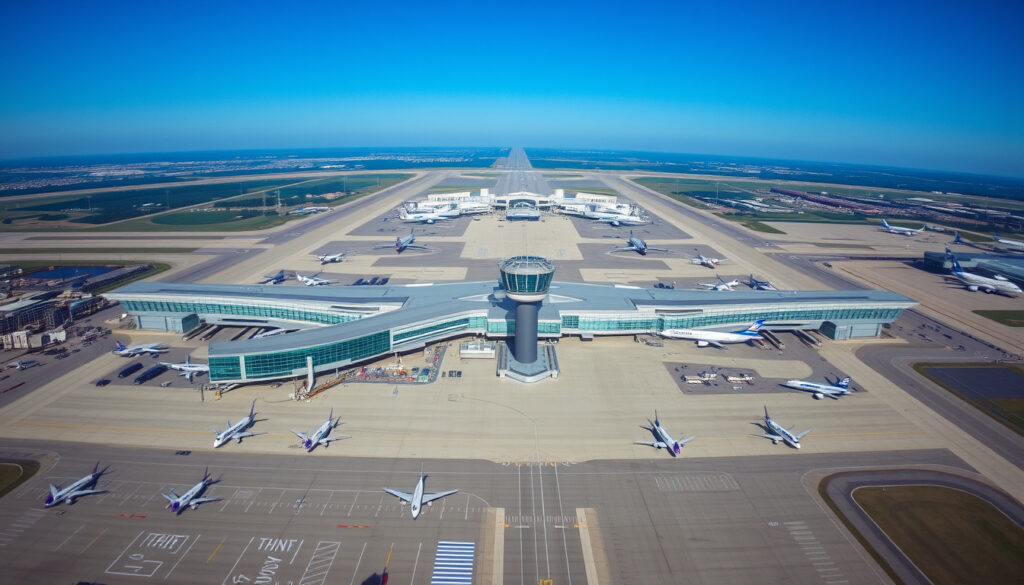
George Bush Intercontinental Airport – Complete Visitor Guide
George Bush Intercontinental Airport (IAH) Guide
George Bush Intercontinental Airport serves as Houston’s primary gateway for international travelers, anchoring the city’s aviation infrastructure approximately 23 miles north of downtown. The facility operates as a major connecting point for passengers traveling between North America and destinations across Latin America, Europe, and Asia. As one of the busiest airports in the United States, it handles millions of passengers annually through its network of five passenger terminals and an extensive array of airline partners.
The airport’s designation as a hub for United Airlines places it among the most strategically important aviation facilities in the country. Travelers passing through its gates encounter a complex but navigable system designed to accommodate both domestic connections and international arrivals. The airport’s five terminals each serve distinct functions, from handling regional domestic flights to processing passengers arriving from overseas destinations.
Understanding the layout and services available at George Bush Intercontinental Airport can significantly improve the travel experience. Whether passengers are planning their first visit or are frequent flyers seeking updated information about terminal connections and parking options, having a comprehensive overview helps streamline the journey through this major transportation hub.
What is George Bush Intercontinental Airport?
George Bush Intercontinental Airport, identified by the IATA code IAH and ICAO code KIAH, functions as the principal international airport serving the Houston metropolitan area. Located at 2800 N Terminal Rd in Houston, TX 77032, the facility spans a substantial footprint that accommodates the aviation needs of one of America’s largest cities. The airport operates under the ownership of the City of Houston through the Houston Airport System, maintaining infrastructure that supports both passenger operations and cargo activities.
2800 N Terminal Rd
Houston, TX 77032
IAH / KIAH
City of Houston
United Airlines
The airport ranks among the top 10 busiest airports in the United States by passenger traffic, serving as a critical link in both domestic and international aviation networks.
Airport Overview and Scale
The airport’s significance extends beyond Texas borders, connecting the region to 69 international destinations and 118 domestic routes. Twenty-seven airlines operate from its facilities, ranging from major carriers to regional specialists. This extensive network positions Houston as a key nexus for business travel, tourism, and freight operations throughout the southwestern United States and beyond.
The United Airlines hub status means that the carrier operates a substantial portion of flights departing and arriving at the airport. Passengers connecting through IAH often find numerous routing options when traveling between cities across the airline’s network. Other carriers including American Airlines, Delta Air Lines, and Spirit Airlines maintain significant presence at the facility, providing competitive options for travelers.
The airport’s role within the broader Houston transportation ecosystem includes connections to ground transportation, rental car services, and hotels. The onsite Houston Airport Marriott provides convenient accommodation for travelers with early morning departures or those experiencing layovers between connecting flights. Those planning broader Texas adventures might find our Great Sand Dunes National Park visitor guide helpful for exploring the state’s diverse landscapes beyond the city.
Quick Facts About IAH
| Fact | Details |
|---|---|
| Opened | 1969 (as Houston Intercontinental) |
| Terminals | 5 (A, B, C, D, E) |
| Runways | 5 |
| Major Hub | United Airlines |
| Total Airlines | 27 |
| Destinations | 69 international, 118 domestic |
How do I get to George Bush Intercontinental Airport?
Reaching George Bush Intercontinental Airport requires understanding the various transportation options available from different starting points in the Houston area. The airport sits roughly 23 miles north of downtown Houston, with multiple highway corridors providing access from various directions. Travelers can select from private vehicle, rideshare services, airport shuttles, or rental cars depending on their preferences and budget considerations.
Driving Directions and Highway Access
The airport connects to several major highway systems that serve the greater Houston region. Interstate 45 runs north-south through Houston and provides direct access for travelers coming from downtown Houston and points south. US-59 (also designated as I-69) offers an alternative corridor for those approaching from the east or traveling between Houston and other Texas cities along the I-69 corridor.
The Hardy Toll Road provides a fee-based express route that bypasses local traffic, potentially reducing travel time from central Houston. The Sam Houston Tollway, also known as Beltway 8, encircles the city and offers access to the airport from the north, west, and southern approaches. Visitors should note that some toll roads in the Houston area utilize electronic toll collection systems, so having a proper transponder or payment method available helps avoid delays.
Primary airport entrances utilize John F. Kennedy Boulevard and Will Clayton Parkway, with clearly marked signs directing traffic toward terminal parking and passenger drop-off areas. The official airport directions page provides detailed routing information for specific origins and destinations.
Parking Options and Facilities
The airport provides approximately 25,000 onsite parking spaces distributed across seven parking garages and surface lots. This extensive parking infrastructure accommodates travelers leaving vehicles during extended trips as well as those seeking short-term parking near the terminals. Garages serving Terminals A and B are located at 2800 N Terminal Rd, offering convenient access for passengers using those facilities.
Premium valet parking services operate at Terminals A, B, D, and E, providing an enhanced level of convenience for travelers willing to pay additional fees. Those seeking more economical parking options can utilize the ecopark and ecopark2 facilities, which offer shuttle service to all terminals. The ecopark locations also accommodate oversized vehicles, a consideration for travelers with larger automobiles or those towing trailers. Winter travelers heading to nearby ski destinations might also consult our Sugar Mountain Ski Resort guide for planning mountain getaways alongside their airport parking arrangements.
Pre-booking parking through official airport channels or authorized providers like parking.com can offer savings compared to drive-up rates, especially during peak travel periods when demand exceeds available spaces.
Alternative Transportation Methods
Rideshare services including Uber and Lyft operate throughout the airport, with designated pickup and drop-off zones at each terminal. The process mirrors other major airports, with travelers following signage to the designated rideshare staging area after completing arrivals procedures.
Rental car facilities occupy significant space at the airport, with most companies maintaining counters in the Terminal E area. Shuttle buses connect passengers from the terminals to rental car lots, though the process varies by company. Travelers should confirm their rental car company location and pickup procedures before arriving at the airport.
The airport contact number (281) 230-3100 connects travelers with information services for directions, parking inquiries, and general airport assistance. This resource proves particularly valuable when navigating unexpected situations or when specific terminal information is needed.
How many terminals does IAH have?
George Bush Intercontinental Airport features five passenger terminals designated A through E, each serving distinct functions within the overall airport operation. Understanding the terminal layout proves essential for travelers connecting between flights, meeting arriving passengers, or simply navigating the airport efficiently. The terminals are not arranged in a simple linear sequence but rather spread across the airport property with varying distances between them.
Terminal Configuration and Connections
The airport provides two primary methods for moving between terminals: the Skyway system operates above ground connecting airside areas, while an underground train service handles landside connections between terminals. This design allows passengers to move between gates without exiting the secure boarding area when making connections, though those needing to change terminals before clearing security must use the landside trains.
Terminal A operates independently from the other terminals, lacking pedestrian connections to B through E. Passengers connecting to or from Terminal A after clearing security must exit the secure area, use landside transportation, and re-clear security at their destination terminal.
Level 1 handles arrivals at most terminals, with the notable exception of Terminal D, which shares Terminal E’s arrivals facilities. Departures operate from Level 2 across all terminals. This consistent vertical separation helps organize passenger flows, with clearly marked signs guiding travelers to their appropriate level based on whether they are departing or meeting arriving passengers.
Terminal-Specific Information
Terminal A accommodates domestic flights primarily, serving airlines including Air Canada, Alaska Airlines, American Airlines, Delta Air Lines, Frontier Airlines, and US Airways. The terminal contains gates A1 through A30 and handles Spirit Airlines operations among other carriers. As noted, Terminal A does not connect via walkways to other terminals, making it essential for passengers to understand their terminal assignment before arrival.
Terminal B underwent significant expansion with a new south section added as of December 2025. The terminal originally served Continental Express and Northwest Airlines operations, though the current airline mix has evolved. Air China operates from gates B12-B16, with that section becoming available in October according to expansion timelines. The older north section contains gates B60-B91.
Terminal C focuses on Continental Airlines operations, featuring gates C14 through C48. The terminal serves as another component of the United Airlines hub operation, with significant flight activity throughout the day. Connections to other terminals utilize the Skyway or underground train systems.
Terminal D handles both domestic and international operations, with gates D1 through D12 available for passenger use. The terminal shares arrivals facilities with Terminal E, meaning passengers landing at D should proceed to E for baggage claim and ground transportation arrangements. This shared arrangement affects ground transportation planning for arriving passengers.
Terminal E serves as the primary international arrivals facility, processing passengers through Federal Inspection Services (FIS) upon landing. A Customs and Border Protection (CBP) office operates near gate E103, facilitating the entry process for international travelers. The terminal contains gates E1 through E24 and manages significant international traffic alongside domestic departures.
Using Terminal Maps Effectively
Interactive terminal maps available through the official United Airlines website and fly2houston.com provide detailed views of gate locations, amenities, dining options, and service facilities within each terminal. These digital resources prove invaluable for passengers with limited mobility, those with tight connections, or travelers seeking specific services such as lounges, restaurants, or charging stations.
PDF versions of airport maps available from ATA Carnet’s airport resources offer downloadable references that work without internet connectivity. Many travelers find value in reviewing terminal layouts before arriving at the airport, particularly when unfamiliar with the facility or when meeting passengers in specific locations.
The Way.com terminal map provides an alternative visualization of the airport layout, including parking facilities and ground transportation options alongside terminal information. Combining multiple map sources often yields the most complete understanding of the airport’s organization.
What is the history of George Bush Intercontinental Airport?
The airport that would become George Bush Intercontinental Airport opened its doors in 1969 under the name Houston Intercontinental Airport. This timing placed the facility among the wave of new airports constructed during the rapid growth of commercial aviation in the late 1960s. The original development reflected Houston’s emergence as a major American city and its growing importance in the energy industry that would define the region for decades.
Development and Naming History
Throughout its early decades, the airport underwent multiple expansions as passenger traffic grew beyond initial projections. The addition of terminals, runways, and support facilities reflected Houston’s sustained economic vitality and its attractiveness as a destination for business and leisure travelers alike. These incremental improvements transformed a regional airport into a major national and international gateway.
The facility received its current designation in 1997 when it was officially renamed to honor George H.W. Bush, the 41st President of the United States and a native Texan. This naming recognized Bush’s contributions to public service and his connection to the Houston area. The transition from Houston Intercontinental to George Bush Intercontinental required updates across signage, marketing materials, and official documentation, a process that occurred smoothly despite the scope of changes involved.
Contemporary Expansions and Developments
Recent terminal improvements have focused on enhancing passenger experience and accommodating growing traffic. The expansion of Terminal B’s south section represents one of the more significant recent projects, adding gates B12-B16 to increase capacity. These additions became operational as of December 2025, reflecting ongoing investment in the airport’s infrastructure to meet current and projected demand.
Information regarding specific future projects such as the DIG Project, detailed runway specifications, precise annual passenger statistics, and exact rename dates remains limited in publicly available sources. Travelers seeking the most current information about ongoing developments should consult official airport resources directly.
The airport continues operating as a hub for United Airlines, maintaining its strategic importance within the carrier’s route network. Competition from nearby William P. Hobby Airport (HOU), which focuses primarily on domestic and low-cost carrier operations, has led to complementary rather than competitive service offerings between the two facilities. This dual-airport system serves the Houston market by providing options for different traveler segments.
Timeline of Key Events
The development of George Bush Intercontinental Airport spans over five decades of aviation history, marked by expansions, operational changes, and adaptations to shifting transportation needs. The following timeline presents major milestones in the airport’s history based on available information.
- 1969 — Houston Intercontinental Airport opens, establishing Houston as a significant aviation destination
- 1997 — Airport renamed George Bush Intercontinental Airport in honor of President George H.W. Bush
- 2010s — Terminal expansion projects modernize facilities and increase passenger capacity
- December 2025 — Terminal B south section expansion with gates B12-B16 becomes operational
This timeline represents key known events based on available sources. For travelers interested in more detailed historical information, resources including Wikipedia’s comprehensive airport article and official Houston Airport System documentation provide additional context and specificity.
What information is confirmed versus unclear about IAH?
When researching George Bush Intercontinental Airport, travelers encounter varying levels of detail depending on the source consulted. Some aspects of the airport’s operations, facilities, and history are well-documented, while others remain subject to update or lack precise confirmation. Understanding what is established versus what remains uncertain helps readers evaluate the reliability of information they encounter.
| Established Information | Information Requiring Verification |
|---|---|
| Official designation: George Bush Intercontinental Airport | Precise rename date in 1997 |
| IATA code IAH / ICAO code KIAH | Detailed specifications of the DIG Project |
| Five terminals (A through E) | Current annual passenger statistics (post-2020) |
| United Airlines hub operations | Exact runway dimensions and configurations |
| Terminal B expansion with gates B12-B16 (December 2025) | Real-time security wait times |
| Parking facilities and capacity (~25,000 spaces) | Specific parking rate structures |
For information requiring verification, travelers should consult official sources including the Federal Aviation Administration for operational specifications and airport-specific resources for current facility information. The dynamic nature of airport operations means that certain details, particularly regarding wait times and service availability, change frequently and warrant direct confirmation before travel.
George Bush Airport in the Houston Context
George Bush Intercontinental Airport plays a vital role within Houston’s broader transportation infrastructure, serving as the primary international gateway for a metropolitan area of over seven million residents. The airport’s 69 international destinations connect the region to global markets, supporting business relationships, tourism, and cultural exchange that benefit the local economy. Meanwhile, 118 domestic routes provide extensive connectivity throughout the United States.
The relationship between IAH and William P. Hobby Airport (HOU) creates a complementary system serving different market segments. Hobby Airport has historically focused on domestic service and low-cost carrier operations, particularly Southwest Airlines. This differentiation allows Houston to maintain competitive air service across multiple segments while avoiding direct redundancy between facilities. Business travelers and those seeking international connections generally gravitate toward IAH, while leisure travelers and price-sensitive consumers often find HOU offers suitable options.
The airport’s location approximately 23 miles north of downtown Houston places it within reasonable driving distance for the majority of metropolitan residents, though travel time varies significantly based on traffic conditions. Peak period congestion on access highways can substantially extend drive times, making early arrival and consideration of alternative transportation methods prudent for time-sensitive travelers.
Sources and Additional Information
Multiple authoritative sources provide information about George Bush Intercontinental Airport operations, facilities, and services. The official fly2houston.com website serves as the primary resource for official airport information, including visitor guides, maps, and operational updates. This site maintains current information about terminal services, parking, and transportation options.
The Houston Airport System operates George Bush Intercontinental Airport as part of the City of Houston’s transportation infrastructure, maintaining facilities that serve millions of passengers annually.
Aviation industry resources including the SkyVector aeronautical database provide technical information about the airport’s physical characteristics, runway specifications, and operational parameters. These resources prove particularly valuable for aviation enthusiasts, pilots, and those seeking detailed facility specifications.
For specific airline information, reservations, and flight status, travelers should consult individual carrier websites or use the flight status tools available through various platforms. Flight schedules, gate assignments, and operational details change frequently, making direct carrier contact the most reliable method for obtaining current trip information.
Summary
George Bush Intercontinental Airport represents a critical component of Houston’s transportation infrastructure, connecting the region to destinations worldwide through its network of five terminals and 27 airlines. The United Airlines hub status ensures numerous flight options for travelers, while the airport’s position approximately 23 miles north of downtown provides reasonable access for metropolitan residents and visitors. Understanding terminal layouts, parking options, and transportation alternatives helps travelers navigate this major aviation facility efficiently.
For those planning visits to Texas, the airport serves as a gateway not only to Houston but to the broader region. Travelers exploring other destinations might find our Great Sand Dunes National Park visitor guide useful for planning outdoor adventures, while those seeking winter recreation information can consult our Sugar Mountain Ski Resort guide for lift prices and planning details.
Frequently Asked Questions
What airlines operate at George Bush Intercontinental Airport?
Twenty-seven airlines operate at IAH, including major carriers such as United Airlines (the primary hub operator), American Airlines, Delta Air Lines, Spirit Airlines, Air Canada, Alaska Airlines, Frontier Airlines, and Air China. Check individual airline websites for current routes and schedules.
How long does security take at George Bush Airport?
Security wait times at IAH vary based on time of day, day of week, and seasonal travel patterns. Peak morning departure times and holiday periods typically see longer lines. Travelers should arrive at least two hours before domestic flights and three hours before international departures. Official security wait time data may be available through airport apps or the flight status portal.
Are there hotels at George Bush Intercontinental Airport?
The Houston Airport Marriott is located onsite, connected to the underground train system that serves all terminals. Additional hotels in the airport vicinity offer shuttle service and parking packages for travelers with early morning flights. Consult hotel booking platforms for current availability and rates.
What is the difference between IAH and HOU airports?
IAH (George Bush Intercontinental) serves as Houston’s primary international gateway with extensive international routes and United Airlines hub operations. HOU (William P. Hobby Airport) focuses primarily on domestic service and low-cost carrier operations. IAH is larger with more terminals and destinations, while HOU offers simpler navigation and is closer to downtown.
How many runways does George Bush Intercontinental Airport have?
The airport has five runways available for aircraft operations. Specific runway dimensions, orientations, and operational capabilities can be verified through FAA airport information or aeronautical databases.
Does IAH have EV charging stations?
Electric vehicle charging facilities are available at the airport. EV charging stations are located at Terminal A/B (Level 4), Terminal C (Level 4), and Terminal D/E (Level 3) in the parking garages. Availability may be limited during peak periods.
What ground transportation options exist from IAH?
Travelers can choose from rideshare services (Uber, Lyft), rental cars (pickup near Terminal E), airport shuttles, and personal vehicles. Highway access is available via I-45, US-59/I-69, Hardy Toll Road, and Sam Houston Tollway. Public transit options may be limited compared to some other major airports.
More related posts
 Tina Fey Movies and TV Shows: The Complete List 2025
 What Is a Chargeback? Process, Costs, and Legal Risks
 Septic Tank Pumping Near Me: Costs, Signs & DIY Risks (Ireland)
 Easy on Me Adele Lyrics Meaning: Full Analysis & Backstory
 How to Find Area of a Circle | Formula, Examples & Calculator
 Best Queso Humacha Near Me: Authentic Bolivian Dip Guide
 Hydrocodone Acetaminophen 5-325: Dosage, Side Effects & Comparisons
 What Are Stem Cells? Types, Sources and Uses Explained