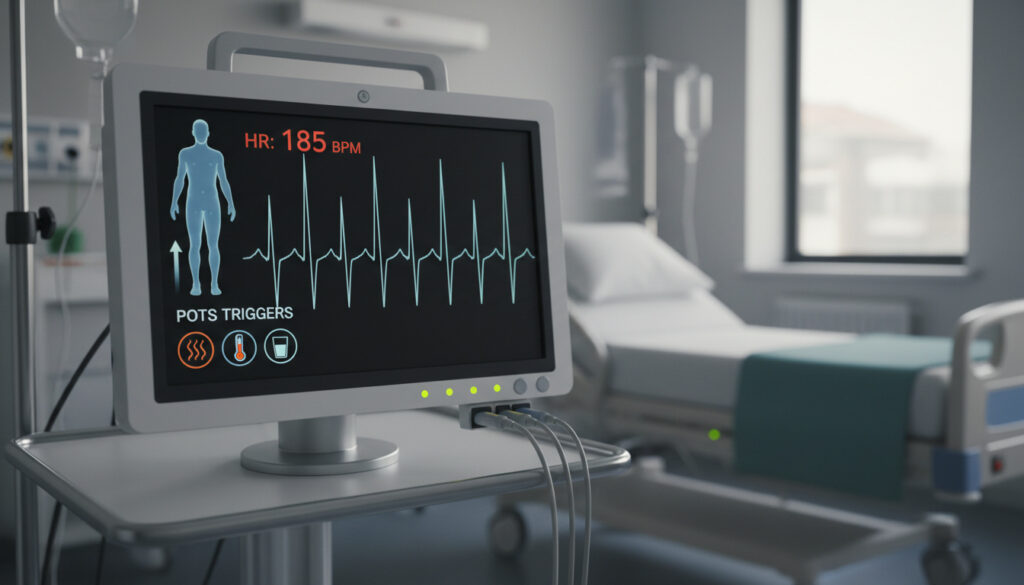
Postural Orthostatic Tachycardia Syndrome Symptoms – Key Signs and Triggers
Postural Orthostatic Tachycardia Syndrome represents a fundamental disruption of the autonomic nervous system, manifesting most dramatically when an individual transitions from lying down to standing. The condition, classified as a form of dysautonomia, forces the heart to race at least 30 beats per minute faster in adults—40 beats per minute in adolescents—while blood pressure remains relatively stable, creating a cascade of debilitating symptoms that often masquerade as anxiety or simple dehydration.
The constellation of symptoms extends far beyond cardiovascular distress. Patients frequently report a disconnect between their physical capabilities and their perceived energy levels, accompanied by cognitive fog that impairs daily functioning. According to data from the Cleveland Clinic, up to 94% of diagnosed cases occur in women, predominantly between ages 15 and 50, with many experiencing onset following viral infections, pregnancy, surgery, or prolonged bedrest.
Recognition remains challenging. The Dysautonomia Project notes that symptoms often emerge gradually, leading to diagnostic delays averaging several years as patients navigate through dismissive assessments attributing their experiences to stress or hormonal fluctuations. Understanding the specific symptom profile serves as the critical first step toward proper clinical evaluation and management.
What Are the Primary Symptoms of POTS?
Heart rate increases ≥30 bpm (40 bpm in teens) within 10 minutes of standing, often exceeding 120 bpm.
Dizziness, lightheadedness, and near-fainting episodes triggered specifically by upright posture.
Profound exhaustion disproportionate to activity levels, often described as bone-deep tiredness unrelated to exertion.
temperature dysregulation, abnormal sweating, nausea, headaches, and purple discoloration of extremities.
- Symptoms affect approximately 0.2% of the general population, with a 5:1 female-to-male ratio.
- Standing represents the universal trigger, though severity fluctuates throughout the day.
- Brain fog and cognitive impairment afflict the majority of patients, independent of fatigue levels.
- Exercise intolerance manifests even with minimal exertion such as climbing stairs or showering.
- Many patients experience dehydration-like symptoms despite adequate fluid intake.
- Palpitations often feel violent or irregular, contributing to anxiety about cardiac health.
- Sleep disruption occurs frequently, compounding daytime symptom severity.
| Symptom | Prevalence | Clinical Presentation |
|---|---|---|
| Heart Rate Acceleration | Universal | ≥30 bpm increase within 10 min standing (adults) |
| Dizziness/Lightheadedness | 80-90% | Occurs immediately upon standing, may include tunnel vision |
| Exercise Intolerance | High | Disproportionate breathlessness and weakness with mild exertion |
| Brain Fog | High | Difficulty concentrating, word-finding issues, memory lapses |
| Headaches/Migraines | Common | Often orthostatic in nature, worsening when upright |
| Nausea/Gastroparesis | Moderate-High | Abdominal pain, bloating, early satiety |
| Shortness of Breath | Moderate | Air hunger despite normal oxygen levels |
| Chest Pain | Moderate | Non-cardiac, sharp or pressure-like |
| Purple Discoloration (Acrocyanosis) | Common | Purplish-red feet and hands when dependent |
| Tremors/Shakiness | Moderate | Fine motor tremor, internal vibration sensation |
What Does a POTS Episode Feel Like?
The subjective experience of POTS diverges significantly between individuals and even within the same patient across different days. Episodes typically commence within seconds to minutes of assuming an upright position, creating an internal sensation of systemic chaos that patients often struggle to articulate to healthcare providers.
Physical Sensations During Symptom Flares
During acute episodes, patients describe an internal sensation of the heart “pounding against the ribs” or vibrating within the chest cavity, sometimes exceeding 120 beats per minute while at rest. This tachycardia frequently accompanies a swimming sensation in the head, visual dimming or tunnel vision, and an overwhelming urge to recline immediately. According to POTS.net, many individuals report feeling “drunk while sober”—a disorienting loss of spatial awareness that impairs coordination and balance.
Peripheral symptoms often include sudden pallor or dramatic flushing, cold clammy skin, and a distinctive purple discoloration of the lower extremities upon standing. Gastrointestinal distress manifests as immediate nausea or cramping, while some patients experience paradoxical temperature dysregulation—simultaneously sweating and experiencing chills.
Cognitive and Emotional Dimensions
The cognitive impact proves equally disabling. “Brain fog” represents more than simple fatigue; patients report losing trains of thought mid-sentence, inability to process written text, and mathematical errors that contradict their baseline capabilities. Human Health documents cases where patients cannot recall familiar words or navigate familiar routes during severe flares.
Formal diagnosis requires documented heart rate increases of at least 30 beats per minute in adults or 40 beats per minute in adolescents within ten minutes of standing, without a corresponding significant drop in blood pressure, as confirmed by tilt-table or standing tests.
What Triggers POTS Symptoms?
POTS symptoms do not emerge randomly. Specific physiological and environmental stressors predictably exacerbate the condition, with flares lasting anywhere from several hours to multiple weeks depending on trigger intensity and patient management strategies.
Environmental and Physiological Triggers
Heat exposure represents one of the most potent aggravating factors. Hot showers, sunny environments, or warm rooms cause peripheral blood vessel dilation, forcing the heart to work harder to maintain cerebral perfusion. Prolonged standing—whether in queues, during concerts, or while showering—similarly overwhelms the compromised autonomic reflexes. Cognitive FX identifies strenuous exercise, viral illnesses, and dehydration as additional catalysts that intensify baseline symptoms.
Hormonal Influences
The menstrual cycle significantly modulates symptom severity. The premenstrual and early follicular phases—characterized by drops in estrogen and progesterone—reduce blood volume through effects on the renin-angiotensin-aldosterone system while increasing inflammatory markers. Pregnancy similarly alters hemodynamic stability, with some patients experiencing temporary remission while others face exacerbation. Cleveland Clinic data confirms this hormonal correlation affects the vast majority of female patients.
What Are Early Signs of POTS?
Recognition in the prodromal phase could shorten the diagnostic odyssey, yet early POTS frequently masquerades as benign conditions. Adolescents face particular diagnostic delays as symptoms are routinely attributed to puberty, growth spurts, or sleep deprivation.
Subtle Symptoms Frequently Dismissed
Initial manifestations often include disproportionate breathlessness after climbing single flights of stairs, persistent “daytime sleepiness” unrelieved by rest, and difficulty tolerating hot environments that peers navigate comfortably. Early symptom data from POTS.net indicates that many patients experience years of unexplained nausea, abdominal pain, or near-fainting episodes before recognition.
Differentiation From Similar Conditions
Unlike orthostatic hypotension, which involves significant blood pressure drops potentially causing bradycardia, POTS maintains relatively stable blood pressure while the heart races. Simple vasovagal syncope typically resolves fully after fainting, whereas POTS symptoms persist throughout upright posture. University of Utah Health emphasizes that tunnel vision and chest pain during standing episodes strongly suggest POTS rather than anxiety or primary cardiac pathology.
Early POTS symptoms frequently mimic anxiety disorders or chronic fatigue syndrome. The presence of specific triggers—particularly standing—and measurable heart rate changes distinguish POTS from psychiatric conditions, requiring clinical confirmation rather than psychological attribution.
Tracking heart rate upon waking, after meals, and during menstrual phases provides objective data for clinicians. Smartphone-compatible blood pressure monitors and symptom diaries help identify patterns invisible to sporadic clinical testing.
How Do POTS Symptoms Progress Over Time?
-
Symptoms typically emerge post-puberty or following specific triggers such as viral infection, concussion, surgery, or pregnancy. The Dysautonomia Project notes some cases develop gradually over months while others appear suddenly after mononucleosis or COVID-19.
-
Within minutes of standing, patients experience immediate tachycardia and presyncope. These acute episodes may last hours if the patient remains upright, only resolving with recumbency.
-
Without management, symptoms solidify into daily patterns with predictable morning severity and fluctuating intensity throughout the day. Flares may last days to weeks during illness or hormonal shifts.
-
Many adolescents experience complete remission within two to five years through rehabilitation protocols. Adults may achieve stabilization through lifestyle modifications, though symptoms often persist lifelong with varying intensity.
What Is Definitively Known Versus Uncertain?
Established Clinical Facts
- Diagnostic criteria require specific heart rate increases without orthostatic hypotension
- Postural change universally triggers symptoms
- Heat, dehydration, and viral illness consistently worsen presentations
- Compression garments and fluid loading provide measurable symptom relief
- Teenagers demonstrate higher remission rates than adult-onset cases
Remaining Uncertainties
- Precise mechanisms initiating autonomic dysfunction remain unidentified
- Predictors of disease severity or progression patterns stay unclear
- Long-term cardiovascular remodeling effects require further study
- Optimal exercise rehabilitation protocols vary significantly between patients
- Genetic predisposition factors remain partially characterized
Who Develops POTS and What Is the Broader Context?
POTS affects approximately 500,000 to 1,000,000 Americans, though prevalence data remains limited by underdiagnosis. The condition disproportionately impacts women during their reproductive years, with onset clustering around menarche, postpartum periods, and perimenopause. Clinical data from Cleveland Clinic confirms associations with autoimmune conditions including Sjögren’s syndrome and celiac disease, though POTS itself is not classified as autoimmune.
The syndrome often emerges following physiological stressors that challenge blood volume regulation or autonomic tone. Viral illnesses—particularly Epstein-Barr virus and recent coronaviruses—serve as common antecedents. Physical trauma, including concussions, and surgical procedures also precipitate onset in susceptible individuals. While not life-threatening, the condition significantly impairs educational attainment, occupational performance, and quality of life when unmanaged.
Clinical Perspectives on Symptom Recognition
“POTS is defined by a heart rate increase of 30 beats per minute or more within ten minutes of standing without significant blood pressure drop. The symptoms reflect real physiological dysfunction, not anxiety or deconditioning, requiring specific rehabilitation approaches.”
— Cleveland Clinic Heart and Vascular Institute
“Parents frequently mistake teen POTS symptoms for normal adolescent laziness or sleep deprivation. The key differentiator is the postural nature of the symptoms—feeling fine when lying down, terrible when standing up.”
— University of Utah Health, Primary Children’s Hospital
What Should You Remember About POTS Symptoms?
POTS manifests as a constellation of symptoms dominated by excessive heart rate elevation upon standing, coupled with dizziness, fatigue, and cognitive impairment that improves when recumbent. The condition disproportionately affects young women but occurs across demographics, frequently following viral illness or trauma. While no cure exists, recognition of specific triggers—including heat, hormonal fluctuations, and dehydration—enables effective management strategies that restore functional capacity.
Frequently Asked Questions
Can POTS symptoms be mild or intermittent?
Yes. Some patients experience mild symptoms that fluctuate daily, with good days allowing near-normal activity and bad days requiring bed rest. Severity often varies with menstrual cycles, weather, and stress levels.
How do POTS symptoms differ between women and men?
Women experience POTS at roughly five times the rate of men, with symptoms tracking hormonal cycles. Menstrual phases with low estrogen typically worsen symptoms, while pregnancy may improve or exacerbate the condition unpredictably.
How long do POTS flare-ups typically last?
Flares range from several hours to multiple weeks. Trigger-specific episodes, such as those caused by heat exposure, usually resolve within hours of cooling down and rehydrating. Post-viral flares may persist for weeks.
Is POTS the same as having low blood pressure?
No. POTS involves rapid heart rate without significant blood pressure drops. Orthostatic hypotension, by contrast, features substantial blood pressure decreases, sometimes with slowing heart rates, causing fainting through different mechanisms.
Can teenagers outgrow POTS symptoms?
Many adolescents experience complete remission within two to five years through physical rehabilitation and growth. However, some develop chronic lifelong symptoms requiring ongoing management into adulthood.
Why do POTS symptoms worsen after eating?
Postprandial symptoms occur because blood pools in the digestive tract after meals, reducing circulation to the brain and heart. Large carbohydrate-heavy meals particularly exacerbate this shunting effect.
Do POTS symptoms occur while sleeping?
While symptoms resolve when lying down, many patients experience sleep disruption including palpitations, night sweats, or adrenaline surges that wake them. Some report morning worsenings upon first standing.
More related posts
 Another Word for Experience – Top Synonyms by Context
 How Old Is Tyla? Age, Real Name, Net Worth, and More
 Apple Watch Series 3 in 2026: Is It Still Worth Using
 Ron Howard Movies and TV Shows: Full Guide to His Career
 Social Security COLA April 9 2026: Payment Amounts & Schedule
 Square Root of 3: Value, Methods, and Proof
 Tennis Courts Near Me in Dublin: Costs & Guide
 Tiger Woods Net Worth (2026): How He Built a $1.5 Billion Fortune