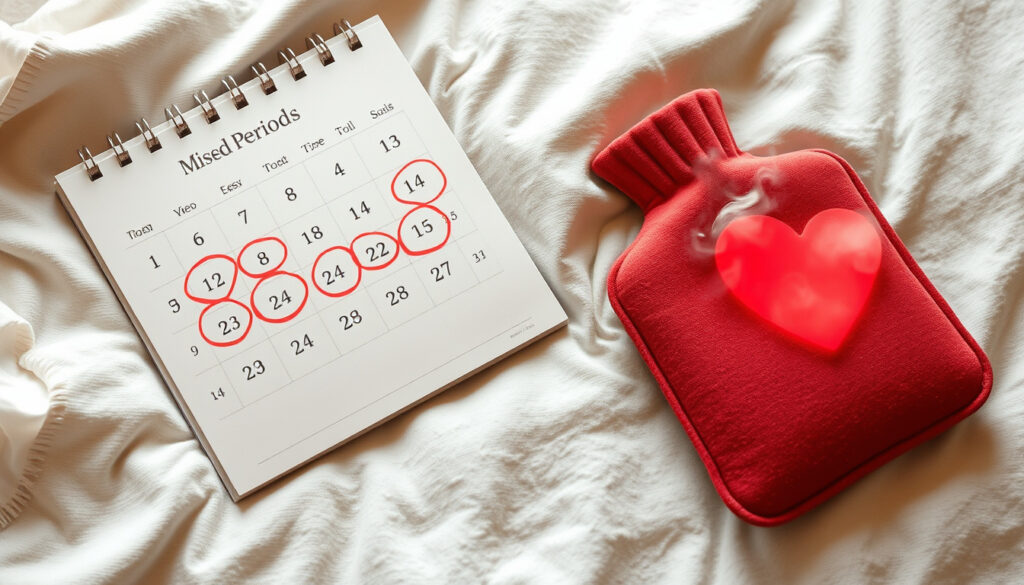
Cramps But No Period: 8 Causes and Red Flags
If you’ve ever Googled “cramps but no period,” you know the worry that comes with it. That familiar pulling sensation low in your belly, but nothing on the pad or app. It could mean pregnancy, an oncoming UTI, or something your body is working through. This guide maps out the clinic-backed reasons — from the common to the urgent — so you know what to watch and when to act.
Common causes listed: Pregnancy, ovulation, stress · UTI signs referenced: 5 common signs · Phantom period link: Endometriosis possible · Top SERP factors: Cramps with discharge, late period · Red flags noted: Severe pain requiring help
Quick snapshot
- Pregnancy signs: cramps plus no bleed signal early implantation (The Bump pregnancy guide)
- UTI: 5 warning signs documented per Cleveland Clinic guidance (MyUTI infection resource)
- PCOS: irregular cycles and cramping without ovulation confirmed (Mom Med health guide)
- Exact phantom period duration varies case by case (Mom Med health guide)
- Stress impact on cycles is individualized and hard to measure (Mom Med health guide)
- Pregnancy test 4–5 days after missed period for accurate reading (Proactive For Her sexual health guide)
- If negative, retest one week later (Flo pregnancy test resource)
- Severe pain, fever, or vomiting — seek care immediately
- Symptoms lasting more than 2 weeks — see a provider
These key facts cover the main causes and timing considerations for cramping without menstruation.
| What to know | Details |
|---|---|
| Potential causes | 8+ including pregnancy, ovulation, stress, PCOS, UTI, endometriosis |
| Management option | Ibuprofen or NSAIDs for cramping from non-urgent causes |
| Pregnancy test timing | 4–5 days after missed period for most accurate results |
| Red flag example | Severe ongoing pain, fever, or vomiting — seek care immediately |
| Phantom link | Endometriosis — tissue outside uterus bleeds internally, causing pain unrelated to period timing |
| UTI and period delay | UTI does not cause false negative pregnancy tests — a late period with UTI is coincidental |
| PCOS cramping | Hormonal imbalances prevent regular ovulation, causing premenstrual symptoms without bleeding |
| Ectopic pregnancy | Occurs in about 2% of pregnancies — may show negative test for 1–2 days post missed period due to lower hCG levels |
Why do I have cramps but no period?
Cramping without bleeding is more common than most people think. Several mechanisms in the body can trigger that familiar pulling or pressure without a period showing up.
Stress and exercise effects
Chronic stress directly affects reproductive hormone regulation. The hypothalamus and pituitary gland — the command centers that manage your menstrual cycle — can be disrupted by elevated cortisol. When cortisol stays high, it can suppress or delay ovulation, or prevent the uterine lining from shedding on schedule. The result is a late or missed period, often accompanied by cramping even though no bleed occurs.
Similarly, intense exercise and significant weight loss can disrupt the hormone signals that drive menstruation. Athletes and people in caloric deficit sometimes experience absent periods alongside cyclical cramping, because the body prioritizes other functions over reproduction.
Ovulation pain
Ovulation pain has a medical name: Mittelschmerz, German for “middle pain.” It refers to the mild to moderate cramping or sharp, sudden pain that can occur when the egg is released from the ovary. The follicle stretches and ruptures, which can cause irritation and a small amount of bleeding into the abdominal cavity. For most people, this passes within hours and doesn’t feel like a full period — but it can feel close enough to create confusion.
IBS or constipation
Gastrointestinal problems frequently create sensations mistaken for menstrual cramping. Gas and bloating from dietary triggers, constipation, IBS flares, and food intolerances can all produce lower abdominal pressure that feels identical to early period pain. Hormonal fluctuations throughout the menstrual cycle also affect digestive function, which explains why digestive symptoms often worsen premenstrually or during menstruation.
If you have cramps no period and diarrhea or constipation together, IBS or another gut condition is a likely culprit.
Stress and GI issues cause cramps without periods that feel very real, but they don’t show up on a pregnancy test. If you’re sexually active, test first before assuming the cause is stress or digestion.
Does cramps without period mean pregnancy?
It’s one of the most common questions in women’s health, and the honest answer is: it can, but it doesn’t always. Understanding how pregnancy tests work helps separate the possibilities.
Early pregnancy symptoms
A missed period combined with light cramping often signals early pregnancy, as the embryo attaches to the uterine wall. This implantation cramping is usually lighter than period cramps and may come with white vaginal discharge. The hCG hormone — what home pregnancy tests detect — only ramps up when a growing embryo starts to burrow into the uterine lining, roughly two weeks after ovulation and conception, or around the time of a missed period.
Common signs of ovulation can be similar to early pregnancy symptoms, including spotting, cramping, breast soreness, and bloating. The overlap is real, which is why distinguishing them requires context and sometimes a retest.
Negative test scenarios
Testing too early before hCG levels are detectable is a primary cause of negative pregnancy tests despite a missed period. There can be as much as a 14-day difference in when ovulation occurs, meaning you may think you are 4 weeks pregnant when you’re only 2 weeks along. If you test too early and the baby is not attached yet, you will not have a positive hCG level, according to Catherine Caponero, DO, an ob-gyn with Cleveland Clinic.
Ectopic pregnancy occurs in about 2% of all pregnancies and can initially show negative pregnancy test results because hCG levels are lower. Gestational trophoblastic disease (GTD), a rare group of conditions including molar pregnancy, occurs in roughly 1 in 1,000 pregnancies and can cause the hook effect — a false negative due to very high hCG levels that overwhelm the test’s detection capacity.
Period late with cramps
Taking a pregnancy test 4–5 days after a missed period provides the most accurate results. If you’ve got a negative pregnancy test but no period, you should ideally wait for one week before taking another test. Pregnancy-like symptoms including irregular periods, cramping, back pain, pelvic pain, and abdominal bloating may be due to other health conditions such as uterine fibroids or ovarian cysts — not pregnancy at all.
Ectopic pregnancy can produce cramping and a negative test for the first couple of days after a missed period. If you have severe one-sided pain, shoulder pain, or dizziness alongside cramping and a negative test, seek emergency care — this is a medical emergency.
Are UTI cramps the same as period cramps?
UTIs do not cause menstrual delays or false negative pregnancy tests, but the pelvic discomfort from a urinary tract infection can mimic period cramping closely enough to cause confusion.
UTI symptoms overview
Pelvic inflammatory disease (PID) occurs when bacteria infect the womb, and the infection can spread to the ovaries and fallopian tubes, usually entering the body as an STI via the vagina. PID can cause lower abdominal pain that feels like period cramps. When caught early, PID can be successfully treated with a course of antibiotics. If not caught early, it can damage the reproductive system, causing infertility, scar tissue formation around fallopian tubes, and chronic pelvic pain.
Interstitial cystitis affects the bladder and can cause discomfort similar to cramps, which may add to the confusion if you’re also dealing with cycle irregularity.
Warning signs
If you have a UTI and a late period with a negative pregnancy test result, this is not due to the UTI infection. UTIs and late periods can occur at the same time by coincidence — the infection does not affect hormone levels or pregnancy test accuracy.
The five common signs of a UTI include: a strong, persistent urge to urinate, a burning sensation when urinating, passing frequent small amounts of urine, cloudy or strong-smelling urine, and pelvic discomfort or pressure in the lower abdomen. Fever, nausea, or back pain alongside urinary symptoms suggest the infection has reached the kidneys and requires prompt medical care.
Differences from period pain
UTI-related pelvic discomfort is typically accompanied by urinary urgency, burning with urination, or changes in urine appearance. Period cramps tend to be bilateral and may be associated with mood changes, bloating, or breast tenderness. If your cramping comes with urinary symptoms, a UTI rather than your cycle is likely the cause.
If pelvic pain with cramping is paired with vaginal discharge that has an unusual odor, itching, or burning, this could indicate pelvic inflammatory disease or another infection — not a period. See a provider rather than waiting for your cycle to start. If you’re experiencing cramps but no period, this article explains the potential causes and red flags, which you can find at red spots on tongue causes.
Why do I feel like I’m having my period but I’m not bleeding?
The sensation of an oncoming period without any bleeding is surprisingly common. Several conditions can produce period-like cramping in the absence of menstruation.
Phantom periods
Phantom periods refer to the experience of premenstrual symptoms — cramping, bloating, mood swings — without an actual bleed. This can happen when hormonal fluctuations are large enough to trigger symptoms but not large enough to prompt shedding of the uterine lining. Anovulatory cycles are menstrual cycles that occur without ovulation and can cause cramps similar to regular periods even without bleeding, because the hormone fluctuations still occur even though no egg was released.
Endometriosis link
Endometriosis is a condition where tissue similar to the uterine lining grows outside the uterus and still responds to hormonal cues, breaking down and bleeding internally. This internal bleeding causes inflammation, scarring, and severe pain often unrelated to period timing. Phantom period cramps that occur outside the regular cycle and last longer than typical period pain are a common presentation of endometriosis.
Duration of symptoms
How long phantom periods last varies widely. Some people experience it for a day or two; others have premenstrual-like symptoms that stretch across weeks. Tracking your cycle and noting when cramping occurs relative to your expected period can help you and your provider identify patterns. Consistently irregular periods may signal a medical condition like PCOS or endometriosis, according to Catherine Caponero, DO.
What causes cramps, no period and white discharge?
Cramping combined with white vaginal discharge and no period points toward hormonal causes, infection, or both. The combination is worth evaluating rather than assuming it will resolve on its own.
Hormonal factors
White vaginal discharge, medically called leukorrhea, is normal throughout the menstrual cycle in most people. However, when it occurs alongside cramping without a period, it often signals hormonal fluctuation — either approaching menstruation or a disruption in regular hormone patterns. Estrogen dominance or progesterone changes can alter discharge texture and volume.
PCOS and perimenopause
PCOS is a common endocrine disorder characterized by hormonal imbalances, often including elevated androgens and insulin resistance, which prevent the ovaries from regularly releasing eggs. Women with PCOS often experience infrequent, irregular, or prolonged menstrual cycles and can experience premenstrual-like symptoms, including cramping, even without ovulating or having a period. The hormonal disruption means discharge may change, and cramping without bleeding is a frequent pattern.
Primary Ovarian Insufficiency (POI), sometimes called early menopause, occurs when the ovaries stop functioning normally before age 40, leading to irregular periods and menopausal symptoms including cramping. Perimenopause — the transition into menopause — similarly causes fluctuating hormones that can produce cramping, white discharge, and skipped periods for years before menstruation fully stops.
When to seek help
White discharge paired with cramping and no period becomes a concern when accompanied by foul odor, itching, or a cottage cheese-like texture — these suggest infection rather than hormonal fluctuation. Conditions like bacterial vaginosis or yeast infection can cause discharge and pelvic discomfort. See a provider if discharge has an unusual smell or texture, if itching or burning is present, or if cramping persists longer than two weeks without a period arriving.
If your period is 4 days late but you have cramps, the temptation is to wait and see. For most people, waiting a week and retesting handles pregnancy concerns. But waiting does not apply when red flags are present — severe pain, fever, or vomiting alongside cramping mean you should seek care the same day.
Related reading: Folate vs Folic Acid: Differences, Benefits and Recommendations · Anna’s Wild Yam Cream: Does It Work? Benefits & Usage Guide
healthline.com, ubiehealth.com, webmd.com, spirehealthcare.com, samphireneuro.com, medicalnewstoday.com
Many women experience similar discomfort from gynecological issues detailed in lower abdominal pain in females, such as cysts or early pregnancy signs warranting attention.
Frequently asked questions
Can pregnancy feel like a period is coming?
A missed period combined with light cramping often signals early pregnancy, as the embryo attaches to the uterine wall. Common signs of ovulation can be similar to early pregnancy symptoms, including spotting, cramping, breast soreness, and bloating. The overlap means pregnancy can initially feel very similar to an approaching period.
What is a red flag for period pain?
Severe pain that disrupts daily life, pain on one side only, fever, vomiting, fainting, or pain that worsens rather than eases over time are all red flags. If cramping without a period is paired with any of these symptoms, seek medical care immediately.
My period is 4 days late but I have cramps — should I be concerned?
A missed period with cramps is often an early pregnancy sign. Taking a pregnancy test 4–5 days after a missed period provides the most accurate results. If the test is negative, wait one week and retest. If symptoms persist or worsen, see a provider.
Cramps but no period and diarrhea — what does that mean?
Gastrointestinal problems frequently create sensations mistaken for menstrual cramping. IBS and inflammatory bowel disease cause cramping, and hormonal fluctuations throughout the menstrual cycle affect digestive function. If cramping and digestive symptoms occur together outside your cycle, IBS or a gut condition may be responsible.
Cramps but no period negative pregnancy test — what now?
Testing too early before hCG levels are detectable is a primary cause of negative tests despite a missed period. Wait one week before retesting. If the second test is negative and still no period arrives, see a provider to check for hormonal conditions, PCOS, or other causes.
How long do phantom periods last?
Phantom period duration varies. Some people experience it for a day or two; others have premenstrual-like symptoms that stretch across weeks. Tracking your cycle and noting when cramping occurs relative to your expected period helps identify patterns worth discussing with a provider.
What are the 5 warning signs of UTI?
The five common signs are: a strong persistent urge to urinate, a burning sensation when urinating, frequent urination in small amounts, cloudy or strong-smelling urine, and pelvic discomfort in the lower abdomen. Fever, nausea, or back pain suggest kidney involvement and require prompt care.
What causes cramps, no period, and white discharge?
Hormonal imbalances from PCOS or perimenopause can produce all three together. Anovulatory cycles cause hormonal fluctuations that trigger premenstrual symptoms without ovulation or bleeding. Yeast infection or bacterial vaginosis can cause white discharge and pelvic discomfort — look for odor or texture changes to distinguish infection from hormonal causes.
More related posts
 Columbia University Acceptance Rate 2030: 4.23% Ivy Stats
 Folate vs Folic Acid: Differences, Benefits and Recommendations
 How to Check Your Chick-fil-A Gift Card Balance (3 Methods)
 How Old Is Tyla? Age, Real Name, Net Worth, and More
 TV Stand with Fireplace: Worth It
 Diamondbacks vs Dodgers Match Player Stats: Key Stats
 Pinellas County Property Appraiser: Search, Exemptions, Tax Guide
 How to Change Facebook Password: Step-by-Step Guide