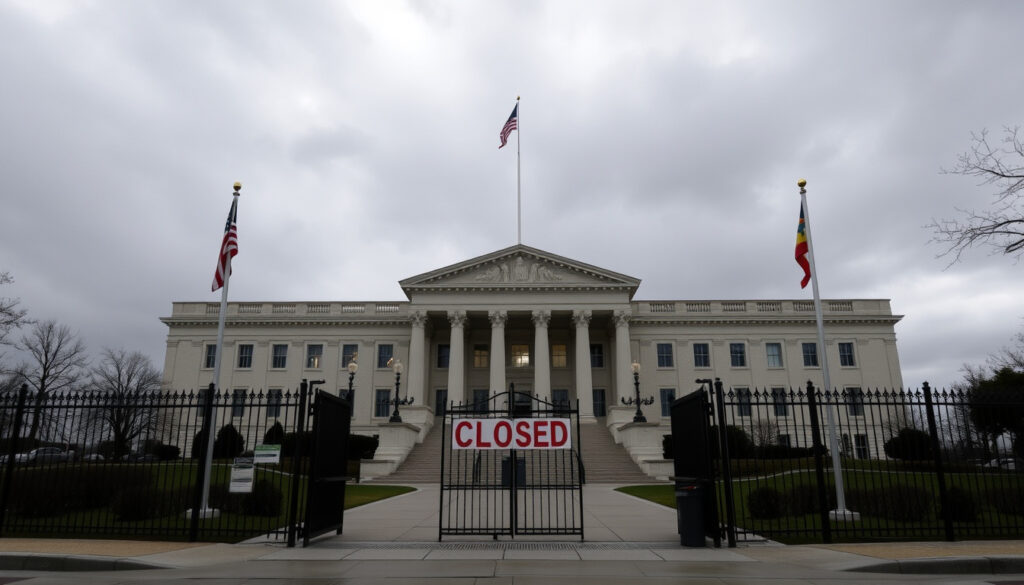
Why Is the Government Shutting Down? 2026 Shutdown
Most people don’t wake up planning to track appropriations bills — until a government shutdown starts affecting their paychecks, their travel plans, or their small-business paperwork. The 2026 funding fight has already produced a short shutdown in late January, according to Wikipedia (encyclopedia), and the reason is familiar but no less frustrating: each year, Congress has to pass a dozen spending bills, and when those bills fail, the money technically runs out.
2026 shutdowns: at least 1 · Appropriations bills required annually: 12 · Non-essential services during a lapse: paused — Brookings (public policy research organization), Wikipedia (encyclopedia)
The numbers below frame the 2026 funding fight.
| Fact | Detail |
|---|---|
| Current status | Ongoing (as of latest update) — Wikipedia (encyclopedia) |
| Start date of the 2026 shutdown | October 1, 2025 — Brookings (public policy research organization) |
| Affected entities | Non-essential federal agencies, including DHS — Wikipedia (encyclopedia) |
| Essential services that continue | National security, air traffic control, Medicare — Brookings (public policy research organization) |
| Appropriations bills required annually | 12 — Brookings (public policy research organization) |
| First 2026 shutdown | Four days, January 31 – February 3, 2026 — Wikipedia (encyclopedia) |
Why did the U.S. government shut down in 2026?
The short answer is a funding lapse. The federal government doesn’t run on a permanent, self-renewing appropriation; it runs on annual spending bills, and when those bills aren’t signed into law, agencies lose the legal authority to spend money. According to Wikipedia (encyclopedia), the 2026 shutdown was tied to Congress not passing six spending bills covering major agencies such as Defense, Labor, Homeland Security, and State.
The longer answer is political. Disputes over policy riders and program funding often block the bills before a shutdown begins, and the shutdown itself becomes the pressure point.
The implication: the shutdown is a symptom of political disagreement, not a technical failure.
What actually happens during a shutdown?
Under the Antideficiency Act, federal agencies cannot spend or obligate money without an appropriation or other congressional authority. Brookings (public policy research organization) describes this as the core legal rule that forces agencies to stop work as soon as funding runs out.
Agencies stop services that are not essential to protect life and property, and employees doing work deemed non-essential are furloughed without pay. That second part matters: essential employees continue working, but they don’t get paid until the shutdown ends. Brookings (public policy research organization) calls this one of the most important details of any lapse.
The pattern: workers bear the immediate cost of legislative gridlock.
What stays open — and what stops?
Most non-essential federal functions cease during the shutdown. The list includes national parks, immigration courts, and some benefit processing, according to Wikipedia (encyclopedia).
By contrast, services that protect life and property continue: national security, air traffic control, and Medicare remain operating. Essential employees often work through the shutdown without receiving a paycheck until it ends. Brookings (public policy research organization) notes this split between “essential” and “non-essential” is the key to understanding what reopens first.
The first 2026 shutdown affected about half of federal departments, according to Wikipedia (encyclopedia).
The pattern: essential services continue, but at the expense of delayed paychecks.
Who is responsible for the government shutdown?
Only Congress can decide how federal money is spent. Executive orders cannot allocate funds that Congress has not appropriated. House Committee on Appropriations (House panel that oversees federal spending) makes this point directly in explaining why a shutdown can’t be solved by presidential decree alone.
Because spending bills become law only after both chambers pass them and the President signs them, the White House and Congress must eventually reach an agreement to reopen the government. That agreement may be temporary — a short-term spending patch — but it still requires a signed law.
Can a president stop a government shutdown?
The President cannot directly end a shutdown without congressional action. Executive orders cannot allocate funds that Congress has not appropriated. The President’s main tools are public pressure and negotiating leverage. In practice, the President and Congress must reach an agreement to reopen the government.
The takeaway: reopening the government requires a deal, not a decree.
How long can a government shutdown last?
The longest shutdown on record lasted 35 days from December 2018 to January 2019. Shutdowns can last days, weeks, or months depending on political negotiation. The 2026 shutdown began October 1, 2025, and has been ongoing as of the latest update. Historical data shows that shutdowns are resolved when Congress passes appropriations or a continuing resolution.
According to NPR, the second shutdown was limited to the Department of Homeland Security and lasted from February 14 to April 30, 2026 — 76 days. The February 3, 2026 spending package passed by the House (217-214) ended the first shutdown but only funded DHS through February 13, as reported by PBS and Politico.
2026 shutdown timeline
- January 31, 2026: The first shutdown begins. Wikipedia (encyclopedia)
- February 3, 2026: The first shutdown ends after four days. Wikipedia (encyclopedia)
- February 14, 2026: A second shutdown begins. Wikipedia (encyclopedia)
Wikipedia further lists April 30, 2026 as the second shutdown’s reported end date, though the page also carried an “ongoing” status as of the latest update.
The uncertainty: the second shutdown’s end date remains unclear.
What’s confirmed vs. what’s still unclear
Confirmed by the spending rules:
- Non-essential federal agencies must cease all operations. Wikipedia (encyclopedia)
- Essential employees continue working, but they don’t get paid until the shutdown ends. Brookings (public policy research organization)
- The first shutdown lasted from January 31 to February 3, 2026. Wikipedia (encyclopedia)
Still unclear:
- No single public source provided a real-time, government-wide status update for the entire 2026 shutdown.
- No resource specifically aggregated all DHS shutdown details in one place.
- No resolution had been announced as of the latest update.
- Whether the DHS-specific shutdown will occur again and the exact number of furloughed employees remain uncertain.
Confirmed facts
Two lines that explain the shutdown
Under the Antideficiency Act, federal agencies cannot spend or obligate money without an appropriation or other congressional authority.
Brookings
The first shutdown lasted four days, from January 31 to February 3, 2026.
Wikipedia
The next phase of the 2026 shutdown fight will probably be measured in missed paychecks and reopened negotiations. Even after the government reopens, the damage to public trust — and to the workers who went without pay — tends to outlast the political headline.
npr.org, nytimes.com, en.wikipedia.org, cnbc.com, cnn.com, congress.gov, case.house.gov, nbcnews.com, crfb.org, en.wikipedia.org
Frequently asked questions
What does “essential vs. non-essential” mean?
Essential employees protect life and property, such as air traffic controllers and some national security staff. Non-essential employees are furloughed and do not work during the shutdown. Brookings (public policy research organization)
Why do essential employees still have to work?
Because the government determines that certain services must continue to protect life and property, but the legal authority to pay those employees is paused until Congress passes an appropriations bill. Brookings (public policy research organization)
Does an executive order prevent a shutdown?
No. Executive orders cannot allocate funds that Congress has not appropriated, so reopening the government requires a signed law. House Committee on Appropriations (House panel that oversees federal spending)
How long did the first 2026 shutdown last?
Four days, from January 31 to February 3, 2026. Wikipedia (encyclopedia)
What is a continuing resolution?
A continuing resolution (CR) is a temporary funding bill that keeps the government operating at current levels until a full appropriations package is passed. If a CR fails, a shutdown occurs. Wikipedia (encyclopedia)
Related reading
More related posts
 Lo juego del hambre: 5 movie in order, plot, ban , treaming
 Chipotle Menu with Prices: $5 Hack, Free Extras, Most Expensive
 Katt Williams Net Worth 2025: Facts vs. His Claims
 Cool Math Games Run Series: Complete Guide to All 6 Versions
 Better Late Than Single: Couples, Season 2, and Cast
 Neil Patrick Harris Amy Winehouse Controversy Explained
 Spider-Man No Way Home – Plot, Cast, Ending Guide
 Things to Do in Washington DC: Top Attractions & Itinerary