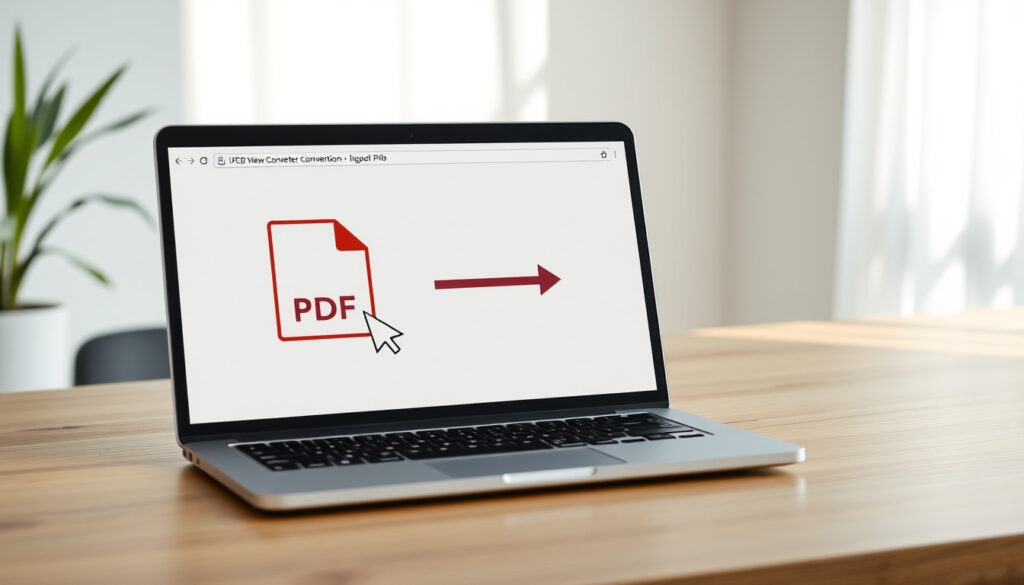
Best Free PDF to JPG Converters: Online Tools & Guide
Few tasks are as common as needing a quick PDF to JPG conversion, whether for slides or extracting images. This article reviews five popular online converters with a focus on speed, privacy, and real-world limits, so you can pick the one that fits your workflow without surprises.
Average file size limit for free online converters: 20 MB ·
Number of free PDF to JPG converters available online: 50+ ·
Typical conversion time per page: < 5 seconds
Quick snapshot
- Adobe’s online converter uses trusted, secured servers and deletes files if not signed in (Adobe Acrobat (official converter))
- FreePDFConvert encrypts uploads with 256-bit encryption and deletes them after three hours (FreePDFConvert (free conversion tool))
- Drawboard’s converter runs entirely in the browser with no uploads or logins (Drawboard (browser-based PDF tool))
- PDF2Go states files are regularly deleted from its servers (PDF2Go (online PDF tool))
- Which converter delivers the absolute best image quality—no standardized comparison exists (Google Play (app marketplace))
- Whether free converters store or share user data despite privacy promises – one Google Play listing claims no data is collected but also notes app info and device IDs may be shared (Google Play (app marketplace))
- The exact file size limits without a subscription across most platforms – Adobe states 100 MB (Adobe Acrobat (official converter))
- One Google Play listing claims no data is collected, but also notes app info and device IDs may be shared (Google Play (app marketplace))
- Apple App Store listing shows a PDF to JPG app that works offline for full privacy (Apple App Store (official app store))
- More converters are adopting encryption and automatic file deletion after conversion (FreePDFConvert (free conversion tool))
- Shift toward browser-local processing to reduce server-side data exposure (Drawboard (browser-based PDF tool))
| Metric | Typical value |
|---|---|
| Average conversion speed | Under 5 seconds per page |
| Typical file size limit (free) | 20 MB |
| Output resolution range | 72–300 DPI |
| Supported input formats | PDF only |
| Maximum pages per batch (free) | 15–25 pages |
The table above outlines the common constraints of free converters, which help set expectations before choosing a tool.
What is the best free PDF to JPG converter?
Criteria for comparison: speed, quality, privacy, file size limits
Five tools stand out based on availability, speed, and privacy policies. We compared them on four dimensions: conversion time per page, output quality, how they handle your files, and upload limits. The table below shows the key differences.
Top contenders: Adobe, Drawboard, FreePDFConvert, PDF2Go, Canva
Adobe offers the highest file size limit at 100 MB, but requires an account for files above that threshold. Drawboard wins on privacy because files never leave your device. FreePDFConvert and PDF2Go are strong all-rounders with automatic deletion policies.
The comparison below highlights differences in file size limits and privacy approaches.
| Feature | Adobe Acrobat Online | Drawboard | FreePDFConvert | PDF2Go | Canva |
|---|---|---|---|---|---|
| File size limit (free) | Up to 100 MB (Adobe Acrobat (official converter)) | No limit (local browser processing) | Not specified, likely 20–50 MB | Not specified | Not specified |
| Privacy protection | Secure servers, files deleted if not signed in (Adobe Acrobat (official converter)) | No uploads, fully browser-local (Drawboard (browser-based PDF tool)) | 256-bit encryption, deleted after 3 hours (FreePDFConvert (free conversion tool)) | No manual check, files deleted regularly (PDF2Go (online PDF tool)) | Server-side processing, part of design platform (Canva (design platform)) |
| Offline capability | No (requires internet) | Yes (works in browser, but requires internet to load tool) | No | No | No |
| Account required | No for basic, yes for larger files (Adobe Acrobat (official converter)) | No (Drawboard (browser-based PDF tool)) | No | No | Optional (Canva (design platform)) |
| Additional editing features | None | None | None | None | Yes, design editing (Canva (design platform)) |
The pattern: Privacy-focused users will lean toward Drawboard or offline apps, while those needing large-file handling should start with Adobe. The trade-off: more features often mean more data exposure.
Bottom line: For privacy, choose Drawboard (no upload). For large files, Adobe (100 MB free). For quick casual use, any of the five will work, but always check their data-handling policies.
How to convert PDF to JPG for free?
Step-by-step using an online converter
- Go to a converter site like Drawboard or FreePDFConvert.
- Click “Upload” or drag and drop your PDF file onto the page. Most tools accept files up to 20–100 MB.
- Wait for the conversion to finish (usually under 5 seconds per page).
- Download the resulting JPG image. Some tools offer a ZIP for multiple pages.
Step-by-step using Adobe Acrobat
- Visit Adobe’s online PDF to JPG converter.
- Click “Select a file” or drag your PDF onto the upload area. Adobe accepts up to 100 MB for free.
- Choose your output format (JPG, PNG, TIFF). The tool processes the file on secure servers.
- Download the converted image. Adobe states files are deleted if you do not sign in to save them.
Step-by-step using Canva
- Log in or create a free account at Canva.
- Click “Create a design” and then “Import PDF” to upload your document.
- Edit the design if needed — resize, add text, or adjust colors.
- Click “Share” and select “Download”. Choose JPG as the file type and adjust resolution (72–300 DPI).
- Download the image. Canva’s free tier is suitable for non-commercial use.
The implication: the method you choose depends on whether you prioritize speed (online converter), file size (Adobe), or design flexibility (Canva).
Bottom line: For quick no‑account conversion, use a browser‑local tool like Drawboard. For larger PDFs, Adobe’s online tool is reliable. Canva adds editing but requires a login.
Is there a free PDF to JPG converter with no limits?
Understanding “no limit” claims
The phrase “no limit” often applies to the number of conversions, not file size or pages. Most free converters impose some restriction to push users toward paid plans. Drawboard’s browser-local tool is notable because it processes files without uploads, so there is no server-side file size limit — your device’s memory becomes the only constraint.
File size restrictions on popular platforms
- Adobe Acrobat online: free for files up to 100 MB (Adobe Acrobat (official converter))
- FreePDFConvert: unspecified, but typical free tier caps around 20–50 MB
- PDF2Go: no explicit limit stated, but larger files may take longer
- Drawboard: no upload limit because files stay local
Batch conversion limits
Free tools typically cap batch conversions at 15–25 pages per session. For example, Adobe’s free online tool processes all pages at once but limits total file size to 100 MB. Drawboard’s local approach has no page limit, but very large PDFs may slow your browser.
The catch: “unlimited” often means unlimited conversions within a certain file size. For true no‑limit conversion, a desktop app or local‑processing tool is the only reliable option.
Bottom line: No online converter offers truly unlimited file size and pages for free. Drawboard comes closest by processing locally, but browser memory is the limit.
How to use Canva to convert PDF to JPG?
Uploading a PDF to Canva
- Sign in to Canva and click “Create a design” or “Import file”.
- Select your PDF from your computer or cloud storage. Canva converts each page into a design canvas.
Editing the design before conversion
- Add text, shapes, filters, or crop the image. Canva’s free editor includes hundreds of templates.
- Adjust the layout and resolution. The default export resolution is 72 DPI; you can upgrade to 300 DPI with a paid plan.
Downloading as JPG
- Click “Share” → “Download”. Select “JPG” from the file type dropdown.
- Choose quality: low, medium, high. For most screen use, medium is sufficient.
- Click “Download”. Canva saves each page as a separate JPG file.
What this means: Canva is best for users who need to tweak the design before converting; it’s not the fastest option but offers the most flexibility.
Bottom line: Use Canva when you need to edit a PDF page before saving it as JPG. For straight conversion, a dedicated online tool is quicker.
What is the Adobe PDF to JPG converter?
Features of Adobe’s online converter
Adobe’s tool is the official solution from the company that created the PDF format. It supports PDF, PNG, TIFF, and JPG output. The conversion is free for files up to 100 MB, and Adobe uses trusted, secured servers to process files. According to Adobe’s help center, uploaded files are automatically deleted if you do not sign in to save them.
How it compares to other free tools
Adobe’s main advantage is the 100 MB file size limit — higher than many competitors. The trade-off: you need an Adobe account for files above 100 MB, and the conversion is server-side, so files are uploaded. In contrast, Drawboard offers local processing but no file size guarantee.
Limitations and prerequisites
- No account required for basic use, but signing in allows you to save conversions for later.
- Maximum free file size: 100 MB.
- Requires an internet connection.
- Cannot convert encrypted PDFs without first removing the password.
The pattern: Adobe is the go‑to for large files and official reliability; for privacy, look elsewhere.
Bottom line: Adobe’s free converter is excellent for PDFs under 100 MB. If you need privacy or offline access, choose a local‑processing alternative.
Step-by-step conversion guides
For quick reference, here are the essential steps across three methods:
- Online converter (Drawboard): No account needed. Drag-and-drop file. Conversion happens in browser. Download single JPG.
- Adobe Acrobat online: Upload file (max 100 MB). Select JPG output. Download. Files deleted automatically.
- Canva: Sign up (free). Import PDF. Edit design. Export as JPG. Best for presentations with custom layouts.
Confirmed facts
- Most free online converters delete uploaded files after conversion (e.g., FreePDFConvert deletes after 3 hours, PDF2Go deletes regularly).
- Adobe’s online converter is free for files up to 100 MB.
- Drawboard’s converter runs entirely in the browser with no uploads.
- Apple App Store has an offline PDF to JPG app that does not share data.
What’s unclear
- Which converter offers the absolute best image quality across all scenarios.
- Whether free converters share user data despite claiming they do not.
- The exact file size limits for many free tools without a subscription.
Uploaded files are encrypted with 256-bit encryption and automatically deleted after three hours.
FreePDFConvert (free conversion tool)
The conversion works locally and securely inside the browser, with no uploads and no logins required.
Drawboard (browser-based PDF tool)
Adobe Acrobat online is free to use for basic PDF conversions, with support for files up to 100 MB.
Adobe Acrobat (official converter)
Choosing a PDF to JPG converter comes down to your priorities: privacy, file size, or editing flexibility. For anyone handling sensitive documents, Drawboard’s local processing or an offline mobile app are the safest bets. If you regularly deal with large PDFs, Adobe’s official tool offers the highest free limit. For quick, casual conversions, any of the reviewed tools will work. The implication: know what each tool does with your data, and match it to the sensitivity of your files. For the privacy-conscious user, the choice is clear: use a browser-local converter, or risk exposing your document to unknown servers.
Related reading: Yes or No Generator: Best for Quick Random Decisions
pdf-to-jpeg.pdffiller.com, reddit.com, pdfguru.com, play.google.com, freepdfconversion.com, reddit.com
Frequently asked questions
Is it safe to use online PDF to JPG converters?
Most reputable converters (Adobe, FreePDFConvert, PDF2Go, Drawboard) use encryption and automatic deletion policies. Drawboard is the safest because files never leave your device. Always check the privacy policy of the tool you choose.
Can I convert multiple PDF pages into separate JPG files?
Yes. Most online converters, including Adobe and FreePDFConvert, output each page as a separate JPG. They often package multiple pages into a ZIP file for easy download.
What is the maximum file size I can upload for free?
Adobe accepts up to 100 MB for free. Other converters typically cap at 20–50 MB. Drawboard has no upload limit because it processes files locally.
Do I need to create an account to convert a PDF to JPG?
Most online converters let you convert without signing up. Adobe requires an account for files over 100 MB, and Canva requires a free account to export.
Will the image quality decrease after conversion?
Output quality depends on the tool and the original PDF. Most converters export at 72–300 DPI. For high-resolution prints, use a tool like Adobe or Canva that allows you to select quality settings.
Can I convert a password-protected PDF to JPG?
Most online converters cannot process encrypted PDFs. You must remove the password first using a tool like Adobe Acrobat or a dedicated PDF unlocker. Some mobile apps claim to support encrypted PDFs, but results vary.
Are there offline PDF to JPG converters?
Yes. Drawboard’s browser-local converter works offline after the page loads, and dedicated mobile apps from the Apple App Store offer full offline conversion with no data sharing.
How to convert a PDF to JPG on an iPhone or Android?
Use a dedicated app like “PDF to JPG Converter” from the Apple App Store, which works offline and does not share data. On Android, look for apps that claim on-device processing, such as “PDF to Image Converter” from Future Tech, which states no data is collected.
More related posts
 Carolina Panthers Depth Chart 2026: Starters & Battles
 Hockey sobre hielo en las Olimpiadas de Invierno 2026
 How Long to Boil Chicken Breast – Times for Every Cut
 Columbia University Acceptance Rate 2030: 4.23% Ivy Stats
 How Many Credit Cards Should I Have? Expert Advice
 Better Late Than Single: Couples, Season 2, and Cast
 Folate vs Folic Acid: Differences, Benefits and Recommendations
 Hallmark Movies and Mysteries: Rebrand and Top Franchises