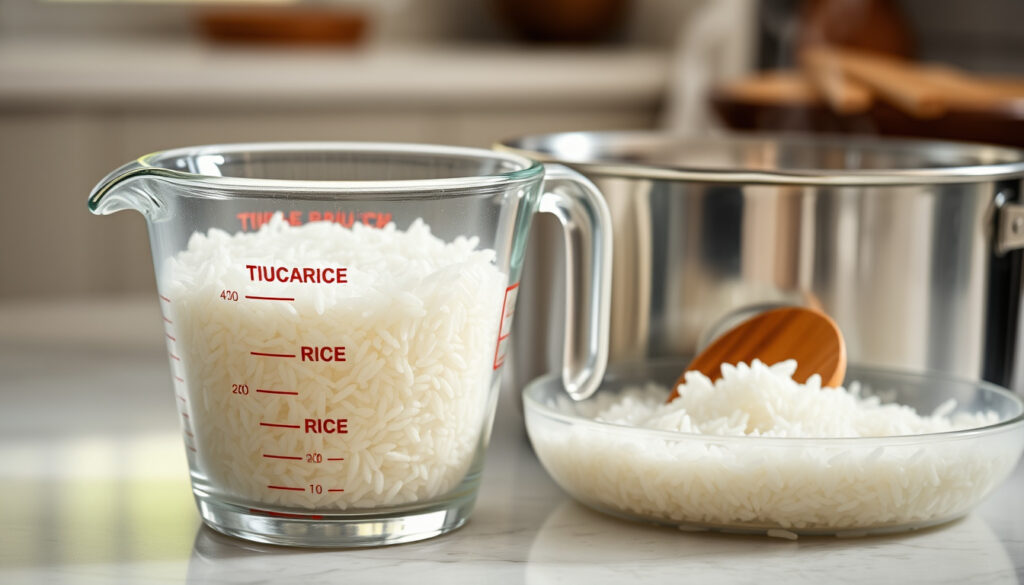
Jasmine Rice Water Ratio: Stovetop, Rice Cooker & Steamer Guide
There’s a reason jasmine rice has earned a spot in so many kitchens: it’s fragrant, slightly sticky, and forgiving—provided you get the water ratio right. Get it wrong and you’re either scooping up mush or crunching through undercooked grains.
“1 1/4 cups water for each 1 cup of jasmine rice is enough for fluffy rice without rinsing.”
— RecipeTin Eats (cooking blog)
Stovetop ratio (volume): 1 cup rice : 1.25 cups water ·
Rice cooker ratio (volume): 1 cup rice : 1 cup water ·
Typical cooking time (stovetop): 12–15 minutes ·
Calories per cooked cup: ~200 kcal
Quick snapshot
- Stovetop ratio of 1:1.25 (volume) is widely recommended (RecipeTin Eats)
- Rice cooker ratio of 1:1 works for most machines (COSORI)
- Jasmine rice requires rinsing to remove excess starch (The Woks of Life)
- Exact optimal ratio depends on grain age and specific brand (Rico Select)
- Whether rinsing is necessary for rice cookers varies by user experience (The Woks of Life recommends it; some users skip it)
- Health differences between jasmine and standard white rice are minimal (The Woks of Life)
- Stovetop: 12–15 minutes simmer then 5–10 minutes rest (RecipeTin Eats)
- Rice cooker: automatic, typically 25–30 minutes (COSORI)
- Steam is done when grains are tender and have absorbed all water (RecipeTin Eats)
- Let rice rest 5–10 minutes off heat before fluffing (Hungry Lankan)
- Store leftovers in airtight container up to 4 days (Hungry Lankan)
- Consider brown jasmine rice for higher fiber (Hungry Lankan)
Most home cooks end up with too much water. Starting with a 1:1.25 ratio (volume) for stovetop and 1:1 for rice cookers gets you in the right ballpark. Adjust based on whether you rinsed or not.
What is the ratio of water to jasmine rice?
The short answer: there isn’t one universal ratio because it depends on cooking method, grain age, and whether you rinse or soak. But for most home kitchens, a few reliable starting points exist.
For stovetop cooking, the most widely cited ratio is 1 cup of jasmine rice to 1.25 cups of water by volume. RecipeTin Eats (cooking blog) says 1¼ cups water per cup of rice yields fluffy grains even without rinsing. The Woks of Life (Chinese home cooking site) also recommends 1:1 but only after a 15–20 minute soak.
Rico Select (rice brand) notes that most cooks use a 1:1.5 ratio (1 cup rice to 1¾ cups water) but a slightly drier 1:1.25 also works. Importantly, they warn that grain age affects water absorption—fresh rice needs less water than a bag that has sat in the pantry for months.
The implication: the ratio is a range, not a rule. Start with the method-specific numbers below and adjust based on your rice’s age and your texture preference.
How to cook jasmine rice on the stovetop
The stovetop method gives you control and is forgiving once you know the rhythm. These steps come from RecipeTin Eats and The Woks of Life.
“A 1:1 ratio of soaked jasmine rice to water works for stovetop cooking, but the rice must be soaked 15–20 minutes first.”
— The Woks of Life (Chinese home cooking site)
Rinsing and soaking steps
- Measure 1 cup of jasmine rice and place in a fine-mesh strainer.
- Rinse under cold running water, swishing with your hand, until the water runs almost clear—usually 30–60 seconds. This removes surface starch that would make the rice gummy.
- For optimal texture, The Woks of Life recommends soaking the rinsed rice for 15–20 minutes before draining. If you skip this step, increase water slightly.
- After soaking, drain thoroughly. RecipeTin Eats notes that if you rinse but don’t soak, reduce water by 2 tablespoons per cup of rice; if you soak 1 hour, reduce by 3 tablespoons.
Simmering and resting
- In a medium saucepan, combine the prepared rice and water using the appropriate ratio: 1 cup rice to 1.25 cups water if unsoaked, or 1 cup rice to 1 cup water if soaked.
- Bring to a brisk boil over high heat, then immediately reduce to low, cover with a tight lid, and simmer for 12–15 minutes.
- Do not lift the lid during cooking—steam is essential for even absorption.
- After the 15 minutes, turn off the heat and let the rice rest, still covered, for 5–10 minutes. Hungry Lankan (recipe blog) emphasizes that resting allows moisture to redistribute.
- Fluff gently with a fork and serve.
Skipping the rest period is the most common reason for sticky, uneven rice. Those 5–10 minutes off heat are where the magic happens.
What is the best jasmine rice water ratio for a rice cooker?
Rice cookers simplify the process, but the ratio still matters. COSORI (appliance brand) recommends 1 cup of rice to 1–1.25 cups of water for most models, with 1 cup being the standard for fluffy individual grains. For a softer texture, push toward 1.2 cups of water.
“For most rice cookers, 1 cup rice to 1–1.2 cups water works well. Start at 1:1 and adjust for your preferred texture.”
— COSORI (appliance brand)
Hungry Lankan suggests 1 cup water for firm rice (great for fried rice) and 1.25 cups for softer, more clingy grains. The key difference from stovetop: rice cookers trap all steam, so you can often use slightly less water. Many rice cooker recipes also skip rinsing, especially if the bowl has a non-stick coating, but The Woks of Life argues that rinsing always improves texture, regardless of the appliance.
The trade-off: convenience versus control. A rice cooker gives you a consistent result with less attention, but you lose the ability to adjust heat or check doneness mid-cook. The ratio of 1:1 is a safe starting point for any machine.
What are common jasmine rice cooking mistakes?
Even experienced cooks hit these pitfalls. Here are the three most frequent, with fixes.
Wrong water ratio
Using too much water turns jasmine rice into porridge; too little leaves a crunchy core. RecipeTin Eats warns that the “one-finger” knuckle method is unreliable—measure precisely. If your rice looks dry at the end, add 2 tablespoons of hot water, cover, and let it steam 5 more minutes.
Lifting the lid while cooking
Every time you peek, steam escapes, raising the effective water ratio. The Woks of Life compares it to opening the oven while baking: you lose heat and moisture. Keep the lid on until the resting stage.
Skipping the rest period
Hungry Lankan calls resting “non-negotiable.” The grains continue to steam and firm up. Without it, you’ll get a sticky, uneven texture even if the ratio was perfect.
What this means: precision in ratio and patience in technique matter more than fancy equipment. Master these three and any method works.
Is jasmine rice healthier than white rice?
Jasmine rice is, technically, a variety of white rice—specifically a long-grain aromatic white rice. The Woks of Life describes it as a “long-grain aromatic rice” that behaves like standard white rice in cooking. Nutritionally, the differences are minimal.
Both jasmine and standard long-grain white rice have a high glycemic index (70–80), meaning they raise blood sugar quickly. According to general nutrition guidance, jasmine rice contains slightly less fiber than some other white rice varieties, and brown jasmine rice is a healthier whole-grain option because it retains the bran and germ.
Why this matters: if blood sugar management is a concern, portion size and pairing with protein or fat matter more than switching to an alternative white rice. Brown jasmine rice is a better choice for fiber, but it requires more water (2:1 volume ratio) and longer cooking time.
Here is how the ratios stack up across methods.
| Method | Rice (volume) | Water (volume) | Notes |
|---|---|---|---|
| Stovetop (unsoaked) | 1 cup | 1.25 cups | Fluffy, separate grains. Reduce water if you rinse. |
| Stovetop (soaked 15–20 min) | 1 cup | 1 cup | From The Woks of Life. |
| Rice cooker (standard) | 1 cup | 1–1.2 cups | Start at 1:1 and adjust. COSORI recommends this range. |
| Rice cooker (softer) | 1 cup | 1.25 cups | Preferred for side dishes. Hungry Lankan uses this. |
| Steamer | 1 cup | 1.5 cups | Need more water for steam loss. Common in Thai cooking. |
The pattern: as the cooking vessel traps more steam (rice cooker > stovetop > steamer), the required water decreases. The exception is steamer, which loses moisture to evaporation.
The catch: grain age and rinsing habits shift these baselines, so treat them as starting points, not rules.
For a more detailed walkthrough of the stovetop and rice cooker process, see our guide to cooking jasmine rice.
Frequently asked questions
Do you need to rinse jasmine rice before cooking?
Yes, unless you want very sticky rice. Rinsing removes excess starch and prevents clumping. The Woks of Life recommends rinsing even for rice cookers.
Can you cook jasmine rice without a lid?
Not recommended—you’ll lose steam and water, and the rice won’t cook evenly. Use a tight lid for the entire simmer and rest period as advised by RecipeTin Eats.
What is the water ratio for jasmine rice in a steamer?
About 1 cup rice to 1.5 cups water. The extra water compensates for steam loss during cooking.
How much water for 2 cups of jasmine rice?
For stovetop unsoaked: 2.5 cups water. For rice cooker: 2 cups water. Adjust proportionally using the ratios from COSORI and RecipeTin Eats.
Can you freeze cooked jasmine rice?
Yes. Cool completely, transfer to a freezer bag, flatten, and freeze for up to 3 months. Reheat in a microwave with a damp paper towel.
Is jasmine rice gluten-free?
Yes, jasmine rice is naturally gluten-free. But always check labels for possible cross-contamination if you have celiac disease.
Does jasmine rice have more arsenic than other rice?
Arsenic levels vary by growing region. Brown jasmine rice tends to have higher levels because arsenic accumulates in the bran. The FDA advises rinsing and cooking in excess water (6:1) to reduce arsenic, though data specific to jasmine is limited.
More related posts
 Sourdough Chocolate Chip Cookies – Easy Recipe Guide
 How Much Caffeine Is in Coffee? A Complete Guide
 Short Hair Styles for Women: 2026 Trends & Best Cuts
 Pantone Color of the Year – 2025 Mocha Mousse Revealed
 Savannah Guthrie Brother-in-Law: False Accusations Explained
 Great Sand Dunes National Park – Complete Visitor Guide
 Battery Store Near Me: Compare Prices & Shops in Ireland
 Color Picker From Image – Extract HEX, RGB & HSL Instantly