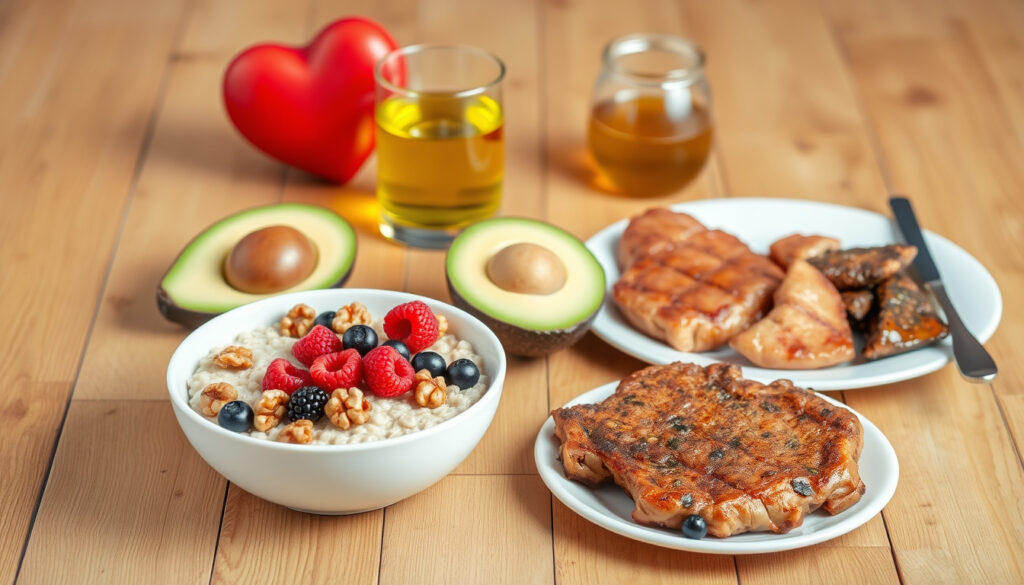
Foods That Lower Cholesterol: What to Eat and Avoid
If you’ve ever stared at a bowl of oatmeal wondering if it’s really doing anything for your cholesterol, you’re not alone. The truth is, certain foods can lower LDL cholesterol through several distinct mechanisms — and the evidence is strong enough that health organizations across the US, Canada, and New Zealand have built dietary guidelines around them, cutting through the noise to show you exactly which foods work, how much you need, and what to avoid.
LDL reduction from soluble fiber: 5-10% ·
Beta-glucan daily intake: 3 g ·
Nuts serving size: 30 g ·
Plant sterols LDL reduction: 5-15% ·
Saturated fat limit (% of calories): <10%
Quick snapshot
- Soluble fiber from oats and barley lowers LDL cholesterol (MedlinePlus (US National Library of Medicine))
- Replacing saturated fats with unsaturated fats reduces blood cholesterol (American Heart Association)
- Plant sterols and stanols block cholesterol absorption in the gut (Mayo Clinic)
- The degree to which individual drinks (e.g., green tea) lower cholesterol varies by study
- Egg consumption’s impact on blood cholesterol differs by individual genetic factors
- Long-term effects of very low-fat diets on overall heart health remain debated
- Dietary changes can lower LDL within 4-6 weeks when consistently applied
- Plant sterol supplements show measurable effects within 2-3 weeks
- Full lipid panel improvements typically seen at 3-month follow-up
- Combine multiple cholesterol-lowering foods for additive effects
- Monitor LDL with a blood test after 3 months of consistent dietary changes
- Consult a doctor if you have genetic conditions like familial hypercholesterolemia
Six key numbers, one pattern: the most effective cholesterol-lowering diets combine multiple mechanisms — soluble fiber, plant sterols, unsaturated fats — rather than relying on any single food.
| Factor | Recommended value | Source |
|---|---|---|
| Recommended daily fiber intake | 25-30 g | MedlinePlus |
| LDL reduction target with diet | Up to 20% | Mayo Clinic |
| Beta-glucan needed per day | 3 g | American Heart Association |
| Nuts serving size | 30 g | Mayo Clinic |
| Plant sterols daily dose | 2-3 g | MedlinePlus |
| Saturated fat limit (% of daily calories) | <10% | MedlinePlus |
What foods help lower cholesterol quickly?
Some foods work faster than others because they target LDL through multiple pathways at once. The most effective choices combine soluble fiber, plant sterols, and unsaturated fats — and the evidence comes from major health organizations.
How does oats and barley work?
- Oats and barley contain beta-glucan, a type of soluble fiber that binds to cholesterol-rich bile acids in the intestine and helps excrete them (Mayo Clinic).
- Eating at least 3 g of beta-glucan daily can lower LDL cholesterol by 5-10% (American Heart Association).
- A single bowl of oatmeal (about 40 g dry oats) provides roughly 2 g of beta-glucan.
Which nuts are most effective?
- Almonds, walnuts, and other tree nuts provide unsaturated fats and plant sterols that reduce LDL (Mayo Clinic).
- A 30 g serving (about a handful) daily is the recommended amount.
- Walnuts are particularly rich in omega-3 fatty acids, which also support heart health.
What fruits and vegetables help?
- Apples, pears, berries, and citrus fruits are high in pectin, a type of soluble fiber that lowers LDL (MedlinePlus).
- Avocados provide monounsaturated fat and fiber that can improve HDL cholesterol and the quality of LDL particles (Mayo Clinic).
- Aim for at least 5 portions of fruits and vegetables daily.
“Eating a variety of cholesterol-lowering foods including oats, nuts, soya, and unsaturated fats can significantly reduce LDL levels.” – Heart UK
The fastest results come from combining beta-glucan-rich oats with a handful of nuts and a piece of fruit — not from any single food in isolation. For someone eating a standard Western diet, this swap alone can shift LDL within weeks.
The implication: quick results don’t require extreme measures. A bowl of oatmeal with berries and walnuts each morning delivers three cholesterol-lowering mechanisms before lunch.
Which drink can reduce cholesterol?
Drinks can play a supporting role, but their effects are modest compared to whole foods. The key is knowing which ones have evidence behind them.
Is green tea effective?
- Green tea contains catechins, antioxidants that may lower LDL cholesterol by reducing absorption in the gut (MedlinePlus).
- Studies show mixed results — some find a 2-5% LDL reduction with 3-5 cups daily, while others show no significant effect.
- The effect is modest and best combined with dietary changes.
What about soy milk?
- Soy milk provides isoflavones and plant sterols that can reduce cholesterol absorption (American Heart Association).
- Replacing cow’s milk with soy milk can lower LDL by about 3-5% in some studies.
- Unsweetened varieties are best to avoid added sugars.
Can orange juice with plant sterols help?
- Fortified orange juice with plant sterols can block cholesterol uptake in the gut (MedlinePlus).
- About 2-3 g of plant sterols daily (found in 1-2 glasses of fortified OJ) can lower LDL by 5-15% (Mayo Clinic).
- Check labels — not all orange juice is fortified with sterols.
“Cutting down on saturated fat and increasing fiber-rich foods like oats and beans is key to managing high cholesterol.” – NHS
Drinks alone won’t solve high cholesterol. A person drinking green tea or fortified OJ while eating a diet high in saturated fat will see minimal benefit. These beverages work best as part of a broader dietary shift.
The trade-off: drinks offer convenience but lower potency. For someone who struggles with whole foods, fortified options provide a practical entry point — but they’re not a substitute for oats, nuts, and vegetables.
What foods are worst for high cholesterol?
Avoiding certain foods is just as important as adding cholesterol-lowering ones. The worst offenders raise LDL through saturated and trans fats.
Which meats and fats to limit?
- Saturated fats from red meat, butter, and cheese raise LDL cholesterol (MedlinePlus).
- UCSF Health advises avoiding fatty meats such as bacon, sausage, franks, luncheon meats, and ribs (UCSF Health).
- Limit saturated fat to less than 10% of daily calories — about 22 g on a 2,000-calorie diet.
What processed foods increase LDL?
- Trans fats from fried foods, baked goods, and stick margarine increase LDL and lower HDL (American Heart Association).
- UCSF Health advises avoiding butter, stick margarine, shortening, lard, palm oil, and coconut oil (UCSF Health).
- Processed meats like sausages and bacon worsen cholesterol profile and increase heart disease risk.
Are dairy products harmful?
- Full-fat dairy (cheese, cream, whole milk) is high in saturated fat and can raise LDL (MedlinePlus).
- Low-fat or skim dairy products are better choices for a cholesterol-lowering diet.
- Yogurt with added plant sterols can be a beneficial option.
Coconut oil and palm oil are often marketed as “natural” but are among the highest sources of saturated fat. A person switching from butter to coconut oil may not see any LDL improvement — and could even see a rise.
The pattern: the worst foods share one trait — they’re high in saturated or trans fats. For someone trying to lower cholesterol, cutting these out matters more than any single food you add.
Can I eat eggs if I have high cholesterol?
Eggs have been controversial for decades, but current evidence suggests they’re not the enemy for most people.
What does the research say?
- Dietary cholesterol from eggs has a modest effect on blood cholesterol for most people (MedlinePlus).
- Saturated fat in the diet has a much larger impact on blood cholesterol than the cholesterol in eggs.
- For about 70% of people, dietary cholesterol has minimal effect on blood levels.
How many eggs per week are safe?
- Current guidelines allow up to 7 eggs per week in a heart-healthy diet (UCSF Health).
- UCSF Health advises limiting egg yolks to three to four per week for those with high cholesterol.
- Egg whites can be eaten freely — the cholesterol is in the yolk.
Does preparation matter?
- Cooking method matters: boiled or poached eggs are healthier than fried eggs cooked in butter or oil.
- Accompanying foods matter more than the egg itself — eggs with bacon and cheese are problematic; eggs with vegetables and whole-grain toast are fine.
- Individuals with genetic conditions like familial hypercholesterolemia should consult a doctor.
“Including oily fish, unsalted nuts, and whole grains in your diet helps protect your heart by lowering cholesterol.” – British Heart Foundation
For the average person, worrying about eggs is a distraction from the real problem: saturated fat from processed meats, butter, and fried foods. Someone who swaps a bacon-and-cheese omelet for a vegetable-and-egg-white scramble has made a meaningful change.
The implication: eggs are not the villain they were once made out to be. For most people, the focus should be on what you eat with your eggs — not the eggs themselves.
What are the six super foods that lower cholesterol?
Heart UK and other health organizations have identified a core group of foods that work through different mechanisms. Combining them provides additive effects.
Why are oats and soya considered super foods?
- Oats provide beta-glucan soluble fiber that binds cholesterol in the gut (Mayo Clinic).
- Soya offers isoflavones and plant sterols that reduce cholesterol absorption (American Heart Association).
- Both are versatile and easy to incorporate into daily meals.
How do nuts and vegetables contribute?
- Nuts provide unsaturated fats and plant sterols that lower LDL (Mayo Clinic).
- Vegetables, especially leafy greens and cruciferous varieties, provide fiber and antioxidants.
- Fruits like apples and pears add pectin fiber that helps excrete cholesterol.
What role do unsaturated fats play?
- Unsaturated fats from olive oil, avocado, and fatty fish help lower LDL when they replace saturated fats (MedlinePlus).
- Fatty fish like salmon, mackerel, and sardines provide omega-3 fatty acids that support heart health (American Heart Association).
- Aim for two portions of oily fish per week.
“Super foods” are only super in context. A person eating oats for breakfast but consuming fried foods for lunch and dinner will see minimal benefit. The power lies in the overall pattern, not individual ingredients.
The pattern: the six super foods work through three mechanisms — soluble fiber (oats, barley, fruits), plant sterols (soya, nuts, fortified foods), and unsaturated fats (nuts, fish, olive oil). Combining all three provides the strongest LDL reduction.
- Multiple mechanisms target LDL from different angles.
- Evidence-based recommendations from major health organizations.
- Easy to combine foods for additive effects.
- Requires consistent daily habits to see results.
- May not be sufficient for individuals with genetic cholesterol disorders.
- Rapid increases in fiber can cause digestive discomfort.
How to lower cholesterol through diet: a practical plan
Knowing which foods help is one thing; putting it into practice is another. Here’s a step-by-step approach based on clinical guidelines.
- Step 1: Increase soluble fiber
- Aim for 10-25 g of soluble fiber daily (MedlinePlus).
- Start your day with oatmeal or barley porridge.
- Add beans, lentils, or chickpeas to soups and salads.
- Snack on apples, pears, or berries.
- Step 2: Replace saturated fats with unsaturated fats
- Limit saturated fat to less than 10% of daily calories (MedlinePlus).
- Use olive oil or avocado oil instead of butter or coconut oil.
- Choose lean poultry and fish over red meat.
- Snack on unsalted nuts instead of processed snacks.
- Step 3: Add plant sterols and stanols
- Consume 2-3 g of plant sterols daily (Mayo Clinic).
- Use fortified spreads, yogurts, or orange juice.
- Include soya products like tofu or edamame.
- Eat a handful of almonds or walnuts daily.
- Step 4: Limit sodium and alcohol
- Keep sodium under 2,300 mg per day (MedlinePlus).
- Limit alcohol — it adds calories that can contribute to weight gain, which raises LDL and lowers HDL (MedlinePlus).
- Choose herbs and spices instead of salt for flavor.
What this means: The combination of these four steps can produce meaningful LDL reductions within weeks, but long-term adherence is key.
For a comprehensive overview, you can refer to the NHS-backed list of cholesterol-lowering foods for additional guidance.
Frequently asked questions
What is the difference between LDL and HDL cholesterol?
LDL (low-density lipoprotein) is often called “bad” cholesterol because it can build up in artery walls and increase heart disease risk. HDL (high-density lipoprotein) is “good” cholesterol because it helps remove excess cholesterol from the bloodstream. A healthy diet aims to lower LDL and maintain or raise HDL.
How much oatmeal should I eat to lower cholesterol?
Eating about 40 g of dry oats (one bowl of porridge) daily provides roughly 2 g of beta-glucan. To reach the recommended 3 g per day, you can combine oatmeal with barley or add oat bran to other foods. Consistent daily intake is more important than the exact amount in a single serving.
Are there any side effects of eating too many cholesterol-lowering foods?
Increasing fiber too quickly can cause bloating, gas, or digestive discomfort. It’s best to increase fiber gradually over a few weeks and drink plenty of water. Nuts are calorie-dense, so stick to the recommended 30 g serving to avoid weight gain, which can worsen cholesterol.
Can I drink alcohol if I have high cholesterol?
Moderate alcohol consumption (up to one drink per day for women, two for men) may have some heart benefits, but alcohol also adds calories that can contribute to weight gain, which raises LDL and lowers HDL (MedlinePlus). If you don’t drink, there’s no reason to start.
Does exercise help lower cholesterol?
Yes. Regular aerobic exercise can raise HDL cholesterol and help with weight management, which indirectly lowers LDL. The American Heart Association recommends at least 150 minutes of moderate-intensity exercise per week for heart health.
How quickly can dietary changes lower cholesterol?
Most people see measurable LDL reductions within 4-6 weeks of consistent dietary changes. Plant sterol supplements can show effects within 2-3 weeks. A full lipid panel at 3 months is the standard follow-up to assess progress.
What are plant sterols and stanols?
Plant sterols and stanols are natural compounds found in plants that block cholesterol absorption in the gut. They are structurally similar to cholesterol and compete for absorption, reducing the amount of cholesterol that enters the bloodstream. They are found in fortified foods like spreads, yogurts, and orange juice.
Related reading
- Easy Meal Prep Ideas: Quick Recipes and Science-Backed Tips — practical strategies for preparing heart-healthy meals.
- Is Peanut Butter Good for You? Benefits, Risks & Facts — a closer look at how nuts fit into a cholesterol-lowering diet.
For someone navigating high cholesterol, the choice is clear: start with the foods that have the strongest evidence — oats, nuts, soya, and unsaturated fats — and cut back on saturated fats from processed meats and fried foods. The alternative is relying on medication alone, which misses the opportunity to address the root cause through diet.
More related posts
 X-Men: First Class (2011) – Cast, Plot & Where to Watch
 George Bush Intercontinental Airport – Complete Visitor Guide
 How Old Is Goldie Hawn? Age, Height, Children & More
 TV Stand with Fireplace: Worth It
 Cheap Apartments Near Me 2025: Best Cities & Budget Guide
 Cast of The Woman in Cabin 10: Keira Knightley, Guy Pearce & More
 Best Arepa Venezolana Near Me in Dublin: Top Spots
 What Is a Good Credit Score? Ranges by Age & Loan Type