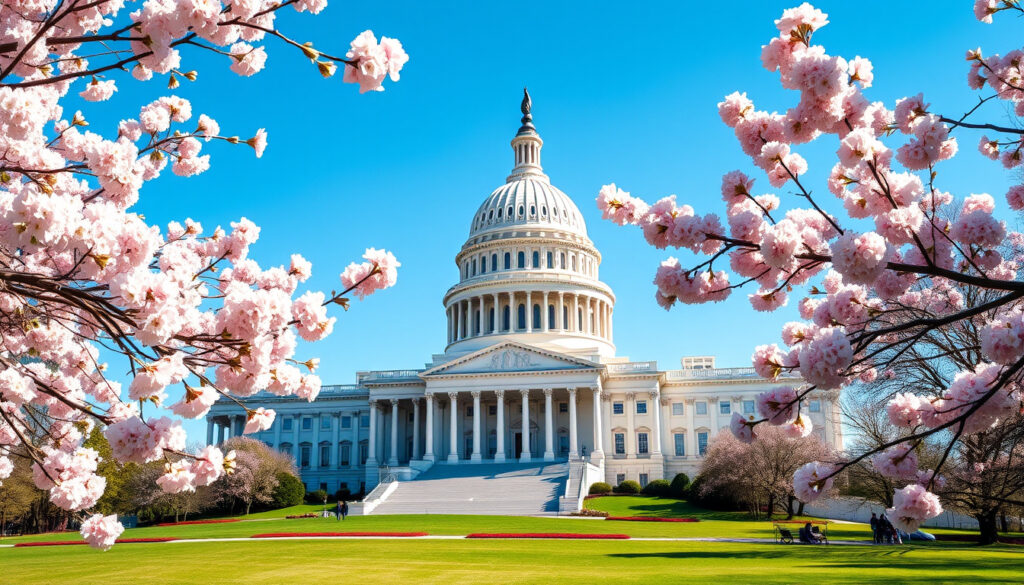
Things to Do in Washington DC: Top Attractions & Itinerary
Planning a first trip to Washington, DC can feel like trying to drink from a firehose — there are monuments, museums, neighborhoods, and a dizzying number of free things to do. But with a little strategy, you can see the iconic sights, explore world-class museums, and still have time for a quiet walk through Georgetown — here’s how to make the most of a 3-day visit, with practical tips on costs, timing, and safety.
National Mall length: 2 miles from the Capitol to the Lincoln Memorial · Free Smithsonian museums: 11 on the National Mall · Annual visitors to Washington DC: over 20 million · Monuments and memorials: more than 100 · Average hotel nightly rate (2024): around $250
Quick snapshot
- Lincoln Memorial (National Park Service)
- Washington Monument (National Park Service)
- Jefferson Memorial (National Park Service)
- World War II Memorial (National Park Service)
- Smithsonian American History (Smithsonian Institution)
- National Air and Space Museum (Smithsonian Institution)
- National Gallery of Art (National Gallery of Art)
- United States Holocaust Memorial Museum (USHMM)
- Georgetown (Georgetown DC)
- Capitol Hill (Washington.org)
- Adams Morgan (Adams Morgan BID)
- Dupont Circle (Dupont Circle BID)
- Eastern Market (Washington.org)
- Library of Congress tour (Library of Congress)
- Kennedy Center rooftop (Kennedy Center)
- National Archives vault (National Archives)
Five numbers that define Washington, DC: one pattern — the city is both compact and packed with resources.
| Attribute | Value |
|---|---|
| Founded | 1790 |
| Population (city proper) | 689,545 (2020 Census) |
| Annual visitors | over 20 million |
| Number of Smithsonian museums | 17 free museums and galleries |
| Top tourist attraction | National Mall (24 million visits per year) |
What are the top five things to do in Washington DC?
Visit the National Mall and Memorial Parks
- The National Mall stretches 2 miles from the Capitol to the Lincoln Memorial, concentrating the nation’s most iconic monuments in a single walkable corridor (Washington.org).
- Key stops include the Washington Monument, World War II Memorial, and the Korean War Veterans Memorial (Moon Travel Guides).
- The entire mall is open 24 hours, and the National Park Service maintains the grounds (National Park Service).
Tour the Smithsonian National Museum of American History
- One of 17 free Smithsonian museums, it houses the Star-Spangled Banner and the First Ladies’ gowns (Washington.org).
- Admission is free every day, though timed passes may be required during peak seasons (Smithsonian Institution).
See the White House from outside
- The White House is viewable from the Pennsylvania Avenue sidewalk; interior tours require advance booking through a member of Congress (White House).
- For a closer look, the White House Visitor Center offers exhibits and a gift shop (Tripadvisor).
Explore the United States Capitol
- Capitol tours are free and can be booked online through the Architect of the Capitol (U.S. Capitol Visitor Center).
- The building is open Monday–Saturday; government buildings may close on weekends (Tripadvisor).
Walk through the Lincoln Memorial and Reflecting Pool
- The Lincoln Memorial is open 24 hours and offers views of the Washington Monument and the Reflecting Pool (National Park Service).
- Sunset is a popular time to visit because the monument is dramatically lit (A Passion and a Passport).
The top five attractions are all free, but the real cost is time — wait times for the Washington Monument elevator can exceed an hour, and same-day White House tour cancellations are rare.
What not to miss when visiting DC?
The monuments at night
- The National Mall’s monuments are illuminated after dark, creating a completely different experience than daytime visits (National Park Service).
- The Jefferson Memorial, in particular, is stunning with reflections on the Tidal Basin (A Passion and a Passport).
Georgetown waterfront and cobblestone streets
- Georgetown’s historic district features cobblestone streets, boutique shopping, and the Washington Harbour waterfront (Washington.org).
- Kayaking and paddleboarding from Key Bridge Boathouse are popular active options (Club Wyndham).
Eastern Market on weekends
- Eastern Market is open Tuesday–Sunday, with a bustling weekend farmers market and arts and crafts (Washington.org).
- It’s a great spot for lunch and local flavor on Capitol Hill (Moon Travel Guides).
The Library of Congress
- The Library of Congress is the largest library in the world, with free guided tours of the Thomas Jefferson Building (Library of Congress).
- It’s connected to the Capitol via an underground tunnel, making it an easy addition to a Capitol Hill visit (Sunshine Whispers).
First-time visitors often skip neighborhoods like Georgetown and Eastern Market because they’re drawn to the Mall. That’s a mistake — these areas offer the city’s real character, and they’re all walkable from the Mall.
The catch: the Mall is magnetic, but the city’s true character lies in its neighborhoods.
Is 3 days in DC enough?
Sample 3-day itinerary
- A well-planned 3-day trip covers the major monuments, 2–3 museums, and at least one neighborhood (Find Love & Travel).
- Additional days allow deeper exploration of Adams Morgan, Dupont Circle, and the National Arboretum (Club Wyndham).
Day 1: National Mall focus
- Start at the Washington Monument, walk the Mall to the Lincoln Memorial, and visit the World War II and Vietnam Veterans Memorials (Moon Travel Guides).
- End the day at the Lincoln Memorial at sunset for photo opportunities (A Passion and a Passport).
Day 2: Museums and neighborhoods
- Spend the morning at the National Museum of American History and the National Gallery of Art (Washington.org).
- Afternoon: explore Georgetown — walk the waterfront, shop, and grab dinner (Club Wyndham).
Day 3: Memorials and local culture
- Visit the U.S. Capitol and Library of Congress in the morning (Sunshine Whispers).
- Afternoon: head to Eastern Market for lunch, then walk through the Capitol Hill neighborhood (Washington.org).
- Evening: catch a free concert at the Kennedy Center rooftop or a show at the National Theatre (Washington.org).
Upsides
- Most major attractions are free, including all Smithsonian museums and the National Mall (Washington.org).
- The city is highly walkable, especially the National Mall area (A Passion and a Passport).
- Public transit (Metro) is reliable and connects all major districts (WMATA).
- Safety in tourist areas is well-maintained with a visible police presence (MPD).
Downsides
- Advance tickets are required for the Washington Monument, White House tours, and some museums (Tripadvisor).
- Government buildings may close on weekends, limiting access (Tripadvisor).
- Hotel rates average around $250 per night, which can strain a budget (Washington.org).
- Summer heat and humidity can make walking the Mall uncomfortable (National Park Service).
How to plan your 3-day trip
- Book ahead — Reserve Washington Monument tickets and White House tour requests at least 30 days in advance (National Park Service).
- Choose your base — Stay near the Mall (Downtown, Capitol Hill, or Foggy Bottom) for walking access (Washington.org).
- Pack light — You’ll walk 5–10 miles per day; comfortable shoes are essential (A Passion and a Passport).
- Use the Metro — Buy a SmarTrip card for unlimited rides; the system runs until midnight on weeknights (WMATA).
- Check closure calendars — Government buildings and some museums close on federal holidays (Tripadvisor).
The implication: advance planning is crucial for a smooth trip.
What to do in DC for the first time?
Start at the National Mall
- The National Mall is the core sightseeing corridor, concentrating major monuments and museums in a walkable area (A Passion and a Passport).
- Free walking tours depart daily from the Washington Monument area (Washington.org).
Visit the National Archives
- The National Archives holds the Declaration of Independence, Constitution, and Bill of Rights (National Archives).
First-time visitors who skip a structured plan often miss the timed-entry requirements for the Washington Monument and White House.
Is it safe to go to DC right now?
General safety overview
- Tourist areas like the National Mall and Smithsonian museums are well-policed and considered safe (MPD).
- DC’s violent crime rate is below the national average, but petty theft can occur in crowded areas (Tripadvisor).
Neighborhood safety tips
- Stick to well-lit, populated streets at night; Georgetown, Capitol Hill, and Dupont Circle are generally safe (Washington.org).
- Use the Metro for longer trips; it runs until midnight on weeknights (WMATA).
What’s confirmed and what’s unclear
Confirmed facts
- Smithsonian museums are free daily (Washington.org).
- The National Mall is open 24 hours (National Park Service).
- White House tours require advance reservation through a member of Congress (White House).
What’s unclear
- Exact wait times for same-day Washington Monument cancellations (National Park Service).
- Current security alert level for specific events (DHS).
- Exact timing of cherry blossom peak bloom each year.
What this means: visitors can rely on free attractions but should prepare for limited same-day access.
“The monuments are lit at night, creating a completely different experience than daytime visits. We recommend the Lincoln Memorial and Jefferson Memorial after dusk for the best views.”
— National Park Service official, via NPS monument lighting schedule
“Our free admission policy ensures that everyone can access the nation’s collections. We encourage visitors to check our website for timed-entry requirements, especially during spring break.”
— Smithsonian spokesperson, via Smithsonian Institution
For a first-time visitor, the choice is surprisingly simple: stick to the free attractions and walkable neighborhoods, and you’ll see the best of Washington, DC without breaking the bank. For the budget-conscious traveler, the 3-day itinerary outlined above delivers maximum value with minimal cost — provided you book those time-sensitive tickets early.
Frequently asked questions
What is the best time of year to visit Washington DC?
Spring (March–May) and fall (September–November) offer mild weather and beautiful foliage. Cherry blossom season in late March to early April is peak tourism, so book early (Washington.org).
Are Washington DC museums free?
Yes, all Smithsonian museums are free daily. The National Gallery of Art and the United States Holocaust Memorial Museum are also free (Washington.org).
Can you walk everywhere in DC?
The National Mall and central neighborhoods are very walkable. For longer distances, the Metro is efficient and affordable (WMATA).
What is the cheapest way to get around DC?
Walking is free, but the Metro and buses are the next cheapest option. A 3-day SmarTrip pass costs about $25 (WMATA).
Do I need to book tickets for the Washington Monument in advance?
Yes, tickets are required and can be reserved online up to 30 days ahead. Same-day tickets are available but limited (National Park Service).
Related reading
- What to Do Today in Ireland: Dublin, Cork, Louth, Tipperary — Another destination guide for first-time visitors.
- Fremont Street Las Vegas: Costs, Nightlife & Strip vs Fremont — A comparison of two iconic Las Vegas strips.
More related posts
 RSV Symptoms in Adults: First Signs and Recovery
 How Many Credit Cards Should I Have? Expert Advice
 Why Are Flags at Half Mast Today? US, UK & Ireland Guide
 Postural Orthostatic Tachycardia Syndrome Symptoms – Key Signs and Triggers
 Charlie Kirk Shooter in Custody: Latest Court Developments
 Best Rogue Build Diablo 4: Season 12 Tier List & Guides
 Five Letter Word Finder: How to Use, Solve, and Unscramble
 Folate vs Folic Acid: Differences, Benefits and Recommendations